
So if you're shopping for a 2026 RAV4, you'll notice there's no gas-only RAV4 anymore. Every 2026 RAV4 is either a hybrid or a plug-in hybrid. And Toyota's fully electric SUV isn't called a RAV4 at all. The fully electric Toyota is a separate model called the bZ. So in this guide I'll go over how the three kinds of car work and what each one costs to buy and to run. Then I'll cover the real pros and cons, to help you figure out which one makes sense for you.
And for what it's worth, I drive a 2025 RAV4 Hybrid XSE myself, so the hybrid is the one I live with every day.
Quick picks: which 2026 Toyota fits you
What a hybrid, a plug-in hybrid and a fully electric car actually are
So if you're new to all this, the names sound alike, but the three work very differently. The big difference is where the energy comes from: gas, electricity or both.
The 2026 RAV4 Hybrid: gas only, but helped by electric motors
Basically, the 2026 RAV4 Hybrid has a gas engine plus electric motors and a small battery. You fill the RAV4 Hybrid with gas like any car, and you never plug it in.
The RAV4 Hybrid charges its own small battery when you slow down and brake. Then it uses that electricity to help the gas engine, so it burns less gas, mostly in town. And the RAV4 Hybrid can creep along on electricity alone for short, slow stretches, like in a parking lot or a garage.
Something to note is how the RAV4 Hybrid's all-wheel drive works. The front-wheel-drive (FWD) RAV4 Hybrid has two electric motors up front. The all-wheel-drive (AWD) RAV4 Hybrid adds a third electric motor that drives the rear wheels. So there's no driveshaft, the spinning rod that would carry power from the engine to the back wheels.
The 2026 RAV4 Plug-in Hybrid: electric first, then gas
The 2026 RAV4 Plug-in Hybrid works the same way as the RAV4 Hybrid, but with a much bigger battery that you charge from a wall outlet or a charger. On a full charge, the RAV4 Plug-in Hybrid drives roughly 50 miles on electricity alone, quietly and without burning any gas.
Then when the RAV4 Plug-in Hybrid's battery runs low, it turns into a regular hybrid and keeps going on gas. So you never get stranded with a dead battery, because the RAV4 Plug-in Hybrid still has a gas engine and a gas tank. And every 2026 RAV4 Plug-in Hybrid is AWD.
Keep in mind Toyota called the plug-in RAV4 the "RAV4 Prime" through 2024. Toyota renamed the RAV4 Prime the "RAV4 Plug-in Hybrid" for 2025, so you'll still see both names online.
The 2026 Toyota bZ: fully electric, no gas at all
The Toyota bZ is fully electric. Basically, the bZ has no gas engine, no gas tank and no oil changes. You charge the bZ at home or at public chargers, and the battery is the bZ's only fuel.
Now the bZ is a different vehicle from the RAV4, with its own body. The bZ is built on Toyota's electric car platform, the base structure Toyota designed for its electric cars. And before the 2026 model, the bZ was called the "bZ4X." Toyota also sells the larger Toyota bZ Woodland. The bZ Woodland is about 6 inches longer than the bZ and has 375 horsepower. And every bZ Woodland is AWD.
The 2026 RAV4 Hybrid, RAV4 Plug-in Hybrid, bZ and bZ Woodland side by side
So this table puts the main numbers next to each other. Prices are Toyota's starting prices, called MSRP (the manufacturer's suggested retail price). Those prices are before the destination fee, Toyota's delivery charge, which toyota.com's Build & Price tool shows as $1,595 right now. Toyota prices were checked October 14, 2026. And the charging terms in the table, like the plug names and kW, are explained in the charging section further down.
| What you're comparing | 2026 RAV4 Hybrid | 2026 RAV4 Plug-in Hybrid | 2026 Toyota bZ | 2026 Toyota bZ Woodland |
|---|---|---|---|---|
| Starting price | $31,900 to $43,300 | $41,500 to $48,500 | $34,900 to $45,300 | $45,300 to $47,400 |
| Runs on | Gas only, never plugs in | Electricity first, then gas | Electricity only | Electricity only |
| Gas mileage | 38 to 43 mpg combined (EPA) | 36 to 40 mpg combined once the battery runs low (Toyota's estimate) | No gas | No gas |
| Electric range | Short, slow stretches only | 49 to 54 miles (Toyota's estimate, EPA not posted yet) | 236 to 314 miles (EPA) | 260 to 281 miles (EPA) |
| Charging plug | None | J1772 on SE and GR SPORT, CCS1 on XSE and Woodland | NACS (Tesla-style) | NACS (Tesla-style) |
| Home charging time | Doesn't charge | About 4 hours from 10 to 80% on a 240-volt charger (SE and GR SPORT, Toyota's figure) | Toyota doesn't state a time | Toyota doesn't state a time |
| Fast charging | Doesn't charge | XSE and Woodland only, about 30 minutes from 10 to 80% | About 30 minutes from 10 to 80% on a 150 kW or faster charger | About 30 minutes from 10 to 80% on a 150 kW or faster charger |
| Horsepower | 226 FWD, 236 AWD | 324 | 165 to 221 FWD, 338 AWD | 375 |
| 0 to 60 mph in testing | 7.1 to 7.7 seconds (AWD) | 5.2 seconds | 6.2 seconds FWD, 4.7 seconds AWD | No test found |
| Towing | 1,750 lb on FWD and LE AWD, 3,500 lb on other AWD trims | 3,500 lb on SE, XSE and Woodland, no rating on GR SPORT | No towing rating published | 3,500 lb |
| Cargo behind the rear seat | 37.8 cu ft (36.6 on Limited) | 33.6 cu ft | 27.7 cu ft (25.8 with JBL audio) | 33.8 cu ft (33.3 on Premium) |
| Battery warranty | 10 years or 150,000 miles | 10 years or 150,000 miles | 8 years or 100,000 miles | 8 years or 100,000 miles |
| Consumer Reports predicted reliability | 72 out of 100 | No prediction yet | 47 out of 100 | Not listed separately |
Now something to note about the RAV4 Plug-in Hybrid's numbers is that Toyota's own sources don't agree yet. Toyota's website lists 54 miles of electric range on the SE, 52 on the XSE and 49 on the Woodland and GR SPORT. But Toyota's launch press release listed 52 on the SE and 48 on the GR SPORT. And the press release's gas mileage figures for the Woodland and GR SPORT differ too. And the EPA hasn't posted the RAV4 Plug-in Hybrid on fueleconomy.gov yet. So I've used the numbers on Toyota's website, but treat those numbers as Toyota's estimate for now.
2026 prices by trim
So this is every trim's starting price, before the destination fee. The 2026 bZ prices come from news coverage when the 2026 bZ went on sale, because toyota.com now shows the 2027 bZ. The 2027 bZ costs about $80 more per trim. And the kWh number next to two bZ trims is the battery size. A kWh, or kilowatt-hour, is a unit of energy, so a bigger number means a bigger battery.
| Model and trim | Drive | Starting price |
|---|---|---|
| RAV4 Hybrid LE | FWD / AWD | $31,900 / $33,300 |
| RAV4 Hybrid SE | FWD / AWD | $34,700 / $36,100 |
| RAV4 Hybrid XLE Premium | FWD / AWD | $36,100 / $37,500 |
| RAV4 Hybrid Woodland | AWD | $39,900 |
| RAV4 Hybrid XSE | AWD | $41,300 |
| RAV4 Hybrid Limited | AWD | $43,300 |
| RAV4 Plug-in Hybrid SE | AWD | $41,500 |
| RAV4 Plug-in Hybrid Woodland | AWD | $45,300 |
| RAV4 Plug-in Hybrid XSE | AWD | $47,200 |
| RAV4 Plug-in Hybrid GR SPORT | AWD | $48,500 |
| bZ XLE, smaller 57.7 kWh battery | FWD | $34,900 (2027: $34,980) |
| bZ XLE Plus, 74.7 kWh battery | FWD | $37,900 (2027: $37,980) |
| bZ XLE | AWD | $39,900 (2027: $39,980) |
| bZ Limited | FWD / AWD | $43,300 / $45,300 (2027: $43,380 / $45,380) |
| bZ Woodland | AWD | $45,300 (2027: $45,380) |
| bZ Woodland Premium | AWD | $47,400 (2027: $47,480) |
So the gap between the RAV4 Hybrid and the RAV4 Plug-in Hybrid is $5,400 to $8,200, depending on the trims you compare. The RAV4 Hybrid SE AWD, Woodland and XSE each cost $5,400 to $5,900 less than the same trim as a RAV4 Plug-in Hybrid. And the jump from the cheapest AWD RAV4 Hybrid, the LE AWD, to the cheapest RAV4 Plug-in Hybrid, the SE, is $8,200.
The good news is the RAV4 Plug-in Hybrid actually got cheaper for 2026. Consumer Reports says the 2026 Plug-in SE is $3,315 less than the 2025 Plug-in SE, and the 2026 Plug-in XSE is $1,485 less than the 2025 XSE. And Toyota often runs cash offers on the RAV4 Hybrid, the RAV4 Plug-in Hybrid and the bZ, but the offers change every month and by region. So it's worth checking the offers on toyota.com with your ZIP code before you shop.
Real-world mileage and electric range
So the EPA's numbers are a good starting point, but real driving tells you more. Here's what testers and owners have actually gotten from each of the three so far.
- The 2026 RAV4 Hybrid gets close to its EPA rating in normal driving. Consumer Reports got 40 mpg overall from an XLE Premium AWD. And one owner on RAV4World, a big RAV4 owners' forum, gets 46 mpg or more on a 40-mile daily commute in his 2026 Limited. But at a steady 75 mph, Car and Driver got 36 mpg from a Limited AWD.
- The 2026 RAV4 Plug-in Hybrid's electric range changes a lot with speed. At 75 mph, Car and Driver got 38 electric miles from a Woodland. On a mixed route, Edmunds got 58 electric miles from a GR SPORT. And one Oregon owner on 45 to 55 mph roads reports 60 to 76 electric miles a charge in his SE.
- The 2026 bZ loses about 20% of its rated range at highway speed. Car and Driver got 250 miles at 75 mph from an XLE FWD Plus rated 314 miles by the EPA. And Consumer Reports got 261 highway miles from an XLE AWD rated 288 miles.
Something worth noting is what happens after the RAV4 Plug-in Hybrid's battery runs low. Toyota told Consumer Reports the Plug-in's power drops by about 20% once it's running as a regular hybrid, to roughly 260 horsepower. And Car and Driver got 35 mpg on gas at 75 mph, with about 500 miles of highway range on gas.
What each one costs to run for a year
So this is where the three really split apart. The table below shows what you'd spend on gas or electricity in a year. These are my assumptions, so you can swap in your own numbers:
- 12,000 miles a year. The EPA's window sticker uses 15,000, so if you drive more, your costs go up for all three.
- Gas at $4.331 a gallon, the US average for regular in the week of October 12, 2026, from the US Energy Information Administration (EIA).
- Home electricity at 18.31 cents per kWh, the US average for homes in July 2026, the latest month the EIA has. The kWh is the same unit your power bill charges by.
- Public fast charging at $0.60 per kWh. Fast chargers are the high-powered public chargers you'd use on a road trip, and $0.60 is a round number near the middle of 2026 fast-charging prices.
| Vehicle | How it's fueled | Cost per year |
|---|---|---|
| RAV4 Hybrid FWD (43 mpg) | Gas | $1,209 |
| RAV4 Hybrid LE or SE AWD (42 mpg) | Gas | $1,237 |
| RAV4 Hybrid XLE Premium, XSE or Limited AWD (41 mpg) | Gas | $1,268 |
| RAV4 Hybrid Woodland (38 mpg) | Gas | $1,368 |
| RAV4 Plug-in Hybrid, any trim | Every mile charged at home | $733 to $861 |
| RAV4 Plug-in Hybrid SE or XSE | 70% charged at home, 30% gas | $903 to $930 |
| RAV4 Plug-in Hybrid, any trim | Never plugged in | $1,299 to $1,444 |
| bZ or bZ Woodland, any trim | Charged at home | $560 to $672 |
| bZ or bZ Woodland, any trim | Every mile on fast chargers | $1,836 to $2,202 |
Basically, the math is miles divided by mpg, times the gas price. And for electricity, it's the kWh each car uses per 100 miles, times the price per kWh. The EPA's electricity figures already include the energy lost while charging. The RAV4 Plug-in Hybrid's electric numbers come from Toyota's estimate, since the EPA hasn't rated the 2026 Plug-in yet.
So a few things stand out from that table:
- Plugging in at home is what makes the RAV4 Plug-in Hybrid and the bZ cheap to run. A RAV4 Plug-in Hybrid charged at home every night saves about $400 to $570 a year over the same Plug-in never plugged in.
- A RAV4 Plug-in Hybrid that never gets plugged in costs more to fuel than a RAV4 Hybrid. That's because the Plug-in gets 36 to 40 mpg on gas, compared with 42 to 43 mpg for the cheaper Hybrid trims.
- Paying for fast charging wipes out the bZ's savings. At $0.60 per kWh, a bZ costs more per mile than a RAV4 Hybrid burning gas at $4.33 a gallon. So the bZ only saves money if you mostly charge at home.
And keep in mind that electricity and gas prices vary a lot by state. Washington, Oregon and the Southeast have cheaper electricity than California and New England. So these are national averages, and your own numbers could be quite different.
How long the RAV4 Plug-in Hybrid takes to pay for itself
So this is the question most people really want answered. A RAV4 Plug-in Hybrid charged at home every night saves roughly $480 a year in fuel over the cheapest RAV4 Hybrid, at the average prices above.
But the RAV4 Plug-in Hybrid costs $5,400 to $8,200 more to buy. So at today's average prices, the RAV4 Plug-in Hybrid takes about 10 to 17 years to pay back the difference on fuel alone. And that's only if you charge at home almost every day.
Now a state rebate shortens the payback time a lot. For example, Oregon's $1,500 plug-in hybrid rebate cuts a few years off the payback. And if your electricity is cheap or you drive more than 12,000 miles a year, the RAV4 Plug-in Hybrid pays back sooner.
The bZ's payback works out differently. The cheapest 2026 bZ, at $34,900, costs $3,000 more than the cheapest RAV4 Hybrid, the LE FWD at $31,900. And charged at home, that bZ saves about $640 a year over the RAV4 Hybrid LE FWD in fuel. So that's roughly 5 years to make up the difference at average prices.
So ultimately, if you're buying the RAV4 Plug-in Hybrid purely to save money, the numbers are tough to justify right now. But if you want the quick acceleration, the quiet electric driving, or you get a state rebate, the RAV4 Plug-in Hybrid makes a lot more sense.
Tax credits and rebates for the 2026 RAV4 Plug-in Hybrid and bZ
So the biggest money saver, the federal tax credit, is gone. The IRS says the $7,500 federal clean vehicle credit "is not available for vehicles acquired after Sept. 30, 2025." So no 2026 RAV4 Plug-in Hybrid or 2026 bZ bought now gets the federal credit.
But a couple of states still help with the cost of a plug-in hybrid or an electric car. The regular RAV4 Hybrid doesn't qualify for these state rebates and credits, because the RAV4 Hybrid doesn't plug in.
- Oregon's Clean Vehicle Rebate is open through November 4, 2026. The standard rebate, with no income limit, is $2,000 for a new electric car and $1,500 for a new plug-in hybrid. There's also a Charge Ahead rebate for low and moderate incomes: $7,500 for a new electric car and $5,000 for a new plug-in hybrid. You'd need to buy or lease between August 25 and November 4, 2026, and apply within 6 months. And Oregon expects the money to run out, so the rebate is expected to close November 5. Check Oregon's rebate page to make sure your exact trim is on the eligible list.
- Colorado has a $750 state tax credit for 2026 on a new electric car or plug-in hybrid with an MSRP up to $80,000. And there's $2,500 more if the MSRP is under $35,000. You claim the Colorado credit on your state tax return, not at the dealer. Something to note is the 2026 bZ XLE FWD, at $34,900, sits just under $35,000. So check the Colorado Department of Revenue's page on whether the destination fee counts toward that price.
- Other states' programs change often, and some state rebate programs have run out of money. So check your own state's energy office before you count on a rebate.
Charging at home vs public charging
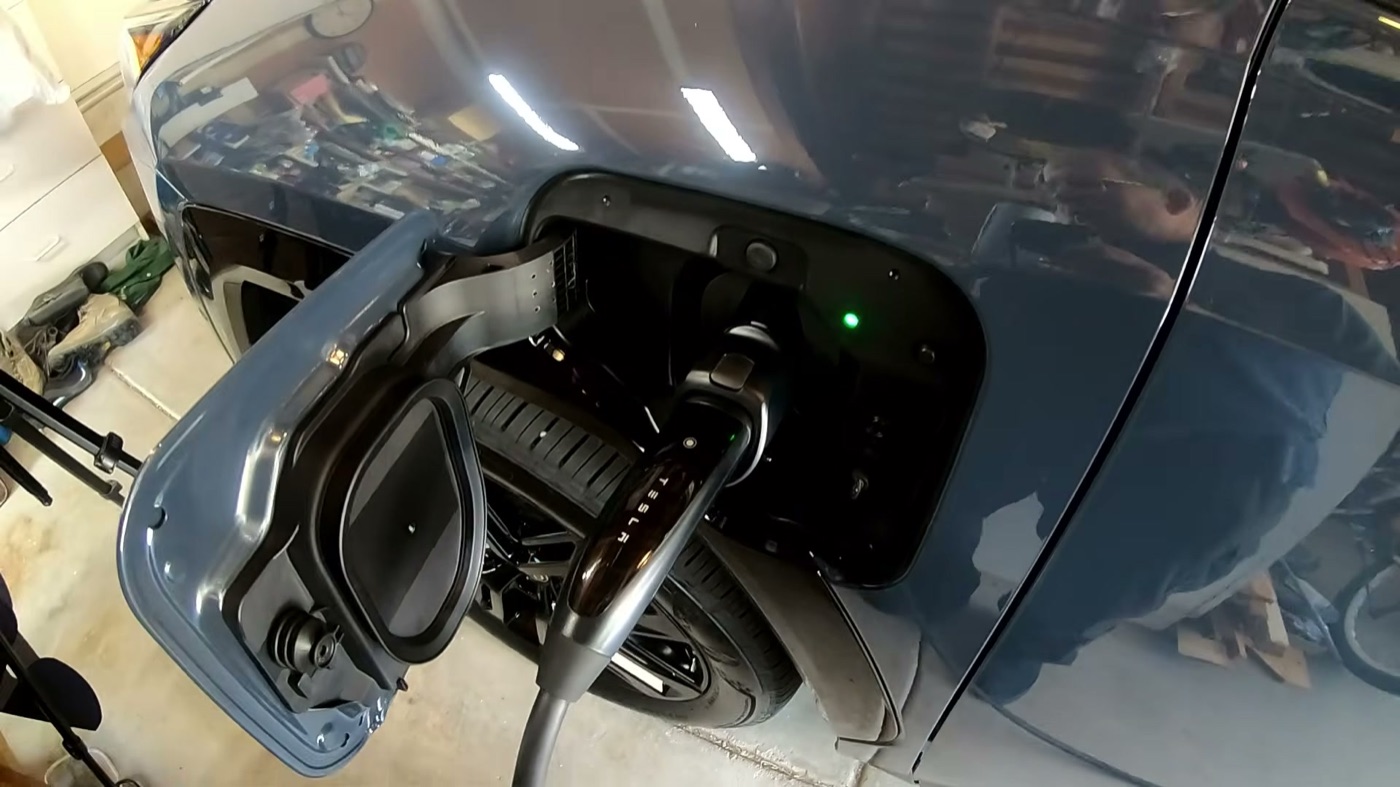
Here's an owner's 2026 RAV4 Plug-in Hybrid XSE plugged in and charging in his garage from a Tesla wall charger, from Beta Cygni's video.
Now if you've never owned a car that plugs in, charging is the part that matters most. There are three ways to charge, and they're very different in speed.
- A regular 120-volt wall outlet is the slowest way to charge. Basically, a 120-volt outlet is the same kind of outlet you'd plug a lamp into. With the RAV4 Plug-in Hybrid and the bZ, Toyota includes a charging cable that works on a 120-volt outlet.
- A 240-volt outlet or wall charger, called Level 2 charging, is much faster. A 240-volt outlet is the heavier-duty kind a clothes dryer plugs into. That same included Toyota cable also works on 240 volts. On the RAV4 Plug-in Hybrid SE and GR SPORT, Toyota says a 240-volt charger takes about 4 hours to go from 10 to 80%.
- DC fast charging is the high-powered public charging you'd use on a road trip. Toyota says both the bZ and the RAV4 Plug-in Hybrid XSE and Woodland go from 10 to 80% in about 30 minutes, in ideal conditions. Fast chargers are rated in kW, or kilowatts, and a higher number means a faster charger.
Something to note is that not every RAV4 Plug-in Hybrid can fast charge. Only the RAV4 Plug-in Hybrid XSE and Woodland have DC fast charging, with a CCS1 fast-charging plug on the driver's side and an 11 kW home charging speed. The RAV4 Plug-in Hybrid SE and GR SPORT can't fast charge at all. The SE and GR SPORT have a J1772 plug, the standard plug for home charging, on the front passenger side and a 7 kW home charging speed. But for a plug-in hybrid, fast charging rarely matters much, since the gas engine covers road trips.
The bZ has a NACS plug, the same plug Tesla uses. So the bZ plugs straight into Tesla Superchargers. The bZ also has Plug & Charge, where some chargers recognize the car so you don't need an app. And the bZ can warm its battery before a fast-charging stop, which helps it charge faster. You can turn that warming on yourself, or the bZ does it automatically when you set a fast charger as your navigation destination. I couldn't confirm whether the bZ comes with an adapter for other fast-charging networks, like Electrify America, so ask the dealer.
So ultimately, home charging is what makes the RAV4 Plug-in Hybrid and the bZ worth it. If you rent, park on the street, or can't add a 240-volt outlet, I'd lean toward the RAV4 Hybrid.
How the hybrid, the plug-in and the bZ handle winter
- The 2026 RAV4 Hybrid burns more gas in the cold. Toyota's 2026 owner's manual says the gas engine may keep running while the engine warms up or when the heater is on. The engine may also keep running when the hybrid battery is very hot or cold. So the RAV4 Hybrid's winter mileage drops, though I haven't found a 2026 winter mileage test yet.
- The 2026 RAV4 Plug-in Hybrid hasn't been through a winter yet. Owners got the first 2026 Plug-ins in spring 2026, and I haven't found a cold-weather test. Toyota's 2026 specs and press release also don't say whether the 2026 Plug-in has a heat pump, a more efficient heater that uses less battery. And RAV4World owners already see lower electric range on cool evenings.
- The 2026 bZ is built for the cold, but the bZ still loses range in cold weather. Every bZ trim has a heat pump, battery warming for fast charging, heated front seats and a heated steering wheel. The bZ Limited adds heated rear seats and a heater for your feet and legs. But one Minnesota owner filmed his 18-mile commute at 15 below zero. He says the bZ's efficiency, meaning how far it goes on a charge, was about half what he gets in summer. And fast charging still worked for him.
I go through every heated feature trim by trim in my 2026 RAV4 Weather Package guide.
Reliability, recalls and early complaints
So Consumer Reports gives the 2026 RAV4 Hybrid a predicted reliability score of 72 out of 100, which it calls "more reliable than the average new car." That prediction is based on the previous RAV4 and Toyota's track record, and Consumer Reports ranks Toyota first of 26 brands. The 2026 RAV4 Plug-in Hybrid doesn't have a prediction yet because Consumer Reports is still testing it. And the 2026 bZ gets 47 out of 100.
The October 7, 2026 recall on the RAV4 Plug-in Hybrid
So on October 7, 2026, Toyota recalled the 2026 RAV4 Plug-in Hybrid, recall number 26V659 (Toyota's own number for the recall is 26TA22). Basically, a fault in the computer that controls the electric motors can reduce power or shut the hybrid system down at higher speeds. Toyota says about 31,000 RAV4 Plug-in Hybrids in the US are affected.
The fix is a free software update at the dealer. Toyota says owners will be notified by early December 2026, but the record from NHTSA, the federal safety agency, says letters start November 22, 2026. Some owners on RAV4World got the recall notice in the Toyota app. And several owner complaints filed with NHTSA describe sudden loss of power or a "Hybrid System Malfunction" warning. Those complaints match the problem this recall fixes.
Other 2026 recalls so far
- The 2026 RAV4 Hybrid has a recall from September 2, 2026 for a label that may show the wrong added weight for accessories. The fix is a new label.
- The 2026 bZ has a recall from June 18, 2026 for a battery computer fault that can cause loss of drive power.
- The 2026 bZ Woodland with the towing converter has a recall from August 6, 2026. A short circuit in the towing converter can switch off stability control and leave the brake lights on.
You can check any car's open recalls by VIN, the car's 17-character vehicle ID number, on NHTSA's recall page.
Early owner complaints on both 2026 RAV4s
Now a few complaints keep coming up from owners of both the 2026 RAV4 Hybrid and the 2026 RAV4 Plug-in Hybrid. These are owner reports, not Toyota findings, and complaint counts aren't the same as how often something fails.
- The sunglasses holder pops open while driving, in five reports to NHTSA.
- The panoramic sunroof or rear glass has shattered, in four reports to NHTSA.
- Surprise automatic braking, meaning the automatic emergency braking kicks in unexpectedly, shows up in several reports to NHTSA.
- "System Malfunction" warnings show up with every driver aid switched off. Driver aids are the safety and assist features, like adaptive cruise control. RAV4World owners tie these warnings to a weak 12-volt battery, the small battery that runs the car's electronics. One 2026 Limited owner had his 12-volt battery replaced under warranty after it dropped to 11.6 volts in a day.
Pros and cons of each one
2026 RAV4 Hybrid pros and cons
- Pro: the RAV4 Hybrid is the cheapest, starting at $31,900.
- Pro: the RAV4 Hybrid never needs charging, so it works for anyone, including renters and people who park on the street.
- Pro: the RAV4 Hybrid gets 38 to 43 mpg, and it holds close to that in real driving.
- Pro: the RAV4 Hybrid has the most cargo room of the three, at 37.8 cubic feet behind the rear seat on most trims.
- Pro: Consumer Reports predicts better than average reliability for the RAV4 Hybrid, and the hybrid battery is covered for 10 years or 150,000 miles.
- Con: the RAV4 Hybrid is the slowest of the three, at 7.1 to 7.7 seconds to 60 mph in testing, and Car and Driver calls the engine noisy.
- Con: the FWD RAV4 Hybrid and the LE AWD only tow 1,750 pounds. So you'd need the SE, XLE Premium, XSE, Woodland or Limited AWD to tow 3,500.
- Con: the RAV4 Hybrid drops to the mid 30s mpg at a steady 75 mph.
2026 RAV4 Plug-in Hybrid pros and cons
- Pro: most people's daily driving can be electric in the RAV4 Plug-in Hybrid. Consumer Reports says the Plug-in's electric range "covers more miles than the average driver uses daily."
- Pro: the RAV4 Plug-in Hybrid is the quick one, with 324 horsepower and 5.2 seconds to 60 mph in testing.
- Pro: the gas engine covers road trips, so you never have to plan around chargers.
- Pro: the RAV4 Plug-in Hybrid is cheapest to run of the two RAV4s when charged at home, and it got cheaper to buy for 2026.
- Con: the RAV4 Plug-in Hybrid costs $5,400 to $8,200 more than a comparable RAV4 Hybrid, which takes 10 years or more to pay back on fuel at today's prices.
- Con: the RAV4 Plug-in Hybrid has about 4 cubic feet less cargo room than the RAV4 Hybrid, because of the bigger battery.
- Con: the 2026 RAV4 Plug-in Hybrid has the October 7 recall, no Consumer Reports reliability prediction yet, and no winter track record.
- Con: only the Plug-in XSE and Woodland can fast charge, and the Plug-in GR SPORT has no towing rating.
- Con: a RAV4 Plug-in Hybrid you don't plug in uses more gas than a RAV4 Hybrid.
2026 Toyota bZ and bZ Woodland pros and cons
- Pro: the bZ uses no gas at all, and it's the cheapest of the three to run when you charge at home.
- Pro: the base bZ costs about the same as a RAV4 Hybrid XLE Premium.
- Pro: the bZ is quick and quiet, and the AWD bZ hit 60 mph in 4.7 seconds in Consumer Reports' testing.
- Pro: the bZ plugs straight into Tesla Superchargers, and every trim has a heat pump plus heated front seats and a heated steering wheel.
- Con: the regular bZ has much less cargo room, at 27.7 cubic feet behind the rear seat, and no front trunk.
- Con: Consumer Reports predicts 47 out of 100 for the bZ's reliability, well below the RAV4 Hybrid.
- Con: the regular bZ has no published towing rating. Only the bZ Woodland is rated to tow, at 3,500 pounds.
- Con: road trips in the bZ depend on fast chargers, which cost more per mile than gas in a RAV4 Hybrid.
- Con: Consumer Reports also flags the bZ's long stopping distance on wet roads, no one-pedal driving, an awkward driving position and little space for small items. One-pedal driving is a setting where lifting off the accelerator slows the car down, so you rarely touch the brake.
- Con: the bZ's battery warranty is shorter, at 8 years or 100,000 miles, compared with 10 years for the RAV4's hybrid battery.
Who should pick the RAV4 Hybrid, the RAV4 Plug-in Hybrid or the bZ
- Pick the 2026 RAV4 Hybrid if you can't charge at home, you drive a lot of highway miles, or you want the most cargo room for the money. For most people, the RAV4 Hybrid is the safe, cheap choice. And if you tow, get an AWD SE, XLE Premium, XSE, Woodland or Limited for the 3,500-pound rating. Car and Driver's pick for value is the RAV4 Hybrid SE.
- Pick the 2026 RAV4 Plug-in Hybrid if you can charge at home and drive under about 40 to 50 miles most days. Then most of your miles become electric, with the gas engine there for road trips. The RAV4 Plug-in Hybrid is also the one to get if you want quick acceleration. And I'd get the XSE or Woodland if you want DC fast charging. Car and Driver picks the Plug-in XSE.
- Pick the 2026 Toyota bZ if you can charge at home, want no gas at all, and mostly drive locally. And if you need to tow or want more room and power, the bZ Woodland is the one to get. The bZ Woodland tows 3,500 pounds and has 33.8 cubic feet of cargo room and 375 horsepower.
Tips for buying a used 2026 RAV4 Hybrid, RAV4 Plug-in Hybrid or bZ
So used 2026 RAV4s and bZs are still rare, but they'll start showing up soon. Here's what I'd check.
- Check the VIN to tell a RAV4 Hybrid from a RAV4 Plug-in Hybrid. Listing sites often file the RAV4 Plug-in Hybrid under "RAV4 Hybrid." So decoding the VIN is the reliable way to know which RAV4 you're looking at.
- Make sure the RAV4 Plug-in Hybrid recall is done. Put the VIN into NHTSA's recall page and check that recall 26V659 shows as fixed. Do the same for the bZ and bZ Woodland recalls.
- Check which RAV4 Plug-in Hybrid trim you're getting. A used SE or GR SPORT can't DC fast charge, but a used XSE or Woodland can.
- Ask about the 12-volt battery if the car shows warning messages, since owners report weak 12-volt batteries on early 2026 RAV4s.
- The RAV4's hybrid battery warranty transfers to you. The hybrid battery warranty on the RAV4 Hybrid and RAV4 Plug-in Hybrid is 10 years or 150,000 miles, and it carries over to the next owner.
Is there a 2027 RAV4?
So Toyota hasn't announced a 2027 RAV4 for the US. Right now toyota.com still sells only 2026 RAV4s. Toyota's press site has no 2027 RAV4 announcement, and the EPA lists no 2027 RAV4. Car and Driver has a 2027 RAV4 page, but that's Car and Driver's own guess that little will change. The 2027 bZ, on the other hand, is already on toyota.com at about $80 more per trim than the 2026 bZ.
Videos worth watching about the 2026 RAV4 Hybrid and the bZ
And if you want to see real-world results for yourself, here are the clearest videos I found. You can play each video right here on the page, and YouTube's usual controls work, including skipping ahead, changing the speed and going full screen. And under each video, I've put a quick summary of what the video covers.
Car Confections drives a 2026 RAV4 Hybrid AWD on a long round trip and measures the real gas mileage at the pump.
- The RAV4 Hybrid's rating: The 2026 RAV4 Hybrid AWD in the video is rated 42 mpg combined by the EPA.
- The result: Over a 433-mile round trip, the RAV4 Hybrid got 43.6 mpg, measured at the pump, so a bit better than its rating.
Edmunds drives a 2026 Toyota bZ on its own mixed range route to see how far the bZ really goes on a charge.
- The bZ's rating: The bZ in the video is rated 278 miles of range by the EPA.
- The result: The bZ went 276 miles on Edmunds' route, almost exactly its rating.
A Minnesota bZ owner films his 18-mile commute at 15 below zero to show how the bZ handles real cold.
- Range in the cold: He says the bZ's efficiency at 15 below is about half what he gets in summer.
- Fast charging in the cold: He says fast charging still works at that temperature.
- Keep in mind: This is one owner on one drive, so treat his result as a rough idea, not a test.
Buddy's take
So ultimately, for most people I'd get the 2026 RAV4 Hybrid. The RAV4 Hybrid is the cheapest of the three, and it never needs a plug. And it gets great mileage, with a strong reliability prediction from Consumer Reports.
But if you can charge at home and your daily driving is short, the 2026 RAV4 Plug-in Hybrid turns most of your miles electric. And the Plug-in is a lot quicker. Just keep in mind the Plug-in's extra cost takes a long time to pay back on fuel alone, so a state rebate really helps.
And if you can charge at home and want to be done with gas, the Toyota bZ is the cheapest to run. I'd just go in knowing the bZ has less cargo room and a weaker reliability prediction. And road trips in the bZ cost more on fast chargers. But if you mostly charge at home, the bZ is still the cheapest of the three to run day to day.
So hopefully this helps you figure out which 2026 Toyota fits the way you drive.
Have a question about “2026 RAV4 Hybrid vs RAV4 Plug-in Hybrid vs the electric Toyota bZ”?
Ask it here. Every question comes to me first. I'll answer as many as I can, and when I answer one, I'll add the question and my answer to this page so other RAV4 owners can see it too. I don't ask for your email, so check back on this page for the answer.
More buying guides
RAV4 Hybrid vs RAV4 Prime vs bZ4X: which one makes sense for you (2019 to 2025)
The 2019 to 2025 RAV4 Hybrid never plugs in, the RAV4 Prime plugs in for about 42 miles of electric driving, and Toyota's bZ4X runs on electricity only. Here's what each one costs to buy and run, and who each one suits.
2026 RAV4 technology features, explained
Toyota dropped the Technology Package on the 2026. Here's where each feature went, trim by trim.
The RAV4 Technology Package, explained
What the Technology Package adds on every 2019 to 2025 trim, what it costs, how each feature works in real life, and which XSE gets the 12.3-inch gauge screen.
Every RAV4 Hybrid trim, compared
Here's every RAV4 Hybrid trim from the LE to the Limited, year by year. And it shows what's standard and what you'd pay extra for.
The 2026 RAV4 Weather Package, explained
Which 2026 trims offer the Weather Package, what the 2026 Weather Package costs, and how the 2026 heated seats and wheel work.
The RAV4 Weather Package, explained
What the Weather Package adds on every 2019 to 2025 trim, what it costs, how each feature works in real life, and who should get it.
- Toyota's 2026 RAV4 press release, October 22, 2025, updated May 8, 2026: the all-hybrid lineup, how the hybrid and plug-in work, horsepower and charging.
- toyota.com spec data, read October 14, 2026: 2026 RAV4, 2026 RAV4 Plug-in Hybrid, bZ (2027) and bZ Woodland (2027): prices, plug-in range and mpg, charging, towing, cargo and warranties.
- Toyota's 2026 bZ press release: NACS port, Plug & Charge, battery warming and cold-weather features.
- Toyota's 2026 RAV4 Plug-in Hybrid recall release, October 7, 2026.
- Toyota's 2026 RAV4 Hybrid owner's manual (OM0R160U): when the engine stays on, page 73, and EV drive mode, page 219.
- The EPA's 2026 RAV4 Hybrid and 2026 bZ ratings on fueleconomy.gov.
- The IRS clean vehicle credit page, Oregon DEQ's rebate announcement, August 26, 2026, and Coltura's summary of Colorado's credit.
- The EIA's gas prices, week of October 12, 2026, and home electricity prices, July 2026. Fast-charging prices from DCFC Tracker's Electrify America and Supercharger reports.
- NHTSA recalls and owner complaints, checked October 14, 2026.
- Car and Driver's 2026 RAV4, 2027 RAV4 and 2026 bZ reviews and test results.
- Consumer Reports' 2026 RAV4 road test and reliability, 2026 RAV4 Plug-in Hybrid first drive and reliability, and 2026 bZ overview and road test.
- Edmunds' plug-in hybrid comparison, via AP, September 2, 2026.
- 2026 bZ prices from Carscoops, The Drive and Cars.com, and 2026 bZ Woodland prices from Electrek. 2027 bZ prices from Electrek and toyota.com.
- RAV4World owner threads: 2026 Limited after 1,200 miles, 2026 Plug-in SE range, 2026 Plug-in SE at 10,278 miles, the missing engine charging mode, lower electric range on cool nights, the plug-in recall notice and 12-volt battery problems.
RAV Buddy is an independent fan site. We're not affiliated with or endorsed by Toyota. RAV4 is a trademark of Toyota Motor Corporation.