
Rubbing alcohol and distilled water is the non-toxic mix that does the best job on the oily haze on the inside of a windshield. A vinegar mix and plain distilled water are cheaper and gentler, but both take more wiping and tend to smear that oily film.
Now something important to note is that nobody has published a measured test of vinegar, rubbing alcohol, distilled water and store cleaners side by side on car glass. So the ranking on this page is my judgment from the closest evidence there is.
That evidence is Consumer Reports' household window test and a small 2026 Shop TODAY mirror test. The evidence also includes what professional detailers use, and what nine groups of users recommend most, from detailing forums to chemical sensitivity groups.
This guide is for you if harsh smells bother you, if you want fragrance-free products, or if you just don't want to spend much. And it's also for anyone dealing with that hazy film on the inside of the windshield.
Why car glass streaks and hazes
Basically, there are four main reasons car glass ends up streaky, and each one explains part of the ranking below.
- Tap water leaves minerals behind. When tap water dries, the calcium and magnesium in it stay on the glass as spots and streaks. That's why every homemade mix on this page uses distilled water.
- The liquid dries too fast or too slow. In the sun or on warm glass, the cleaner dries before you can wipe it off. On a humid day, the cleaner barely dries at all. Both leave streaks, so clean in the shade on cool glass.
- The haze on the inside of the windshield is oily. Plastic parts like the dashboard give off vapor in the heat, and that vapor settles on the cooler glass. Cleaning that film off has been normal upkeep since at least 1972, when Chevrolet put out a service bulletin about it. Because the film is oily, plain water and vinegar tend to smear it, while alcohol cuts it.
- One towel spreads the grime back around. A single towel picks up the dirt and then wipes it back on. So use two towels: one to clean and a dry one to buff.
Now you can slow the inside haze down. Park in the shade or use a sunshade, and skip silicone dash shine products. Smoke, a dirty cabin air filter, and leftover residue from ammonia cleaners can add to the haze too.
And keep in mind Toyota says not to use polish wax or polish cleaner on the RAV4's dashboard. A polished dashboard can reflect off the windshield (2023 to 2025 RAV4 Hybrid owner's manual, p.388).
Something to note about sunshades is that Toyota warns a reflective sunshade can bounce enough sunlight to overheat the front camera behind the windshield. If the front camera overheats, a message can show, and the systems that use the front camera pause until the AC cools the camera down (p.255).
The five non-toxic options, ranked by how well they work
So here are the five options, from the one that works best on oily film down to the gentlest one. The cost per car is my own estimate, based on about 1 fl oz of spray for the whole windshield and every window, inside and out.
| Rank | Option | What's in it | How well it works | Effort and passes | Smell | Cost per car (my estimate) | Evidence |
|---|---|---|---|---|---|---|---|
| 1 | Rubbing alcohol and distilled water, about half and half, then a dry buff | Isopropyl alcohol and water | Best at the oily inside haze, tree sap and road film | Two passes plus a dry buff | Alcohol smell while wet, gone within minutes | About 6 to 7 cents | Detailers' expert opinion, no measured test |
| 2 | ECOS Window Cleaner, Vinegar | Water, plant-derived alcohol, a plant-based cleaning agent and vinegar | Tied the top store cleaner on wipes in one small test | Four wipes in that test, low effort | Slight vinegar smell, no added fragrance | Not known, since ECOS's page doesn't list a price | One small mirror test (Shop TODAY, 2026) and EPA Safer Choice |
| 3 | Branch Basics Streak-Free, one drop of The Concentrate in 24 oz of distilled water | Water, two plant-based cleaning agents, chamomile extract, sodium citrate, baking soda and sodium gluconate | Gentle, close to distilled water with a trace of mild cleaner | Not measured | No added fragrance | About 1 cent, after $55 upfront for the concentrate | Chemically sensitive users' favorite, no independent test |
| 4 | White vinegar and distilled water, 1 to 1 | 5% acetic acid and water | Cleans the mess but streaks more than store cleaners | A lot more wiping than store cleaners | Vinegar smell while you work, fades as it dries | About 3 cents | Consumer Reports' household window test |
| 5 | Distilled water and a glass microfiber towel | Water only | Fine for dust, breath fog and light fingerprints, smears oily film | One or two passes | None | About 1 cent | Toyota's own method for the inside rear window, otherwise no test |
1. Rubbing alcohol and distilled water, then a dry buff
Rubbing alcohol and distilled water is the detailers' choice for the oily haze on the inside of the windshield. Wilson Auto Detailing, a pro detailer whose inside-glass video has about 1.76 million views, reaches for the alcohol mix when one pass of glass cleaner doesn't clear the haze. He wipes first with half rubbing alcohol and half distilled water, then follows up with glass cleaner.
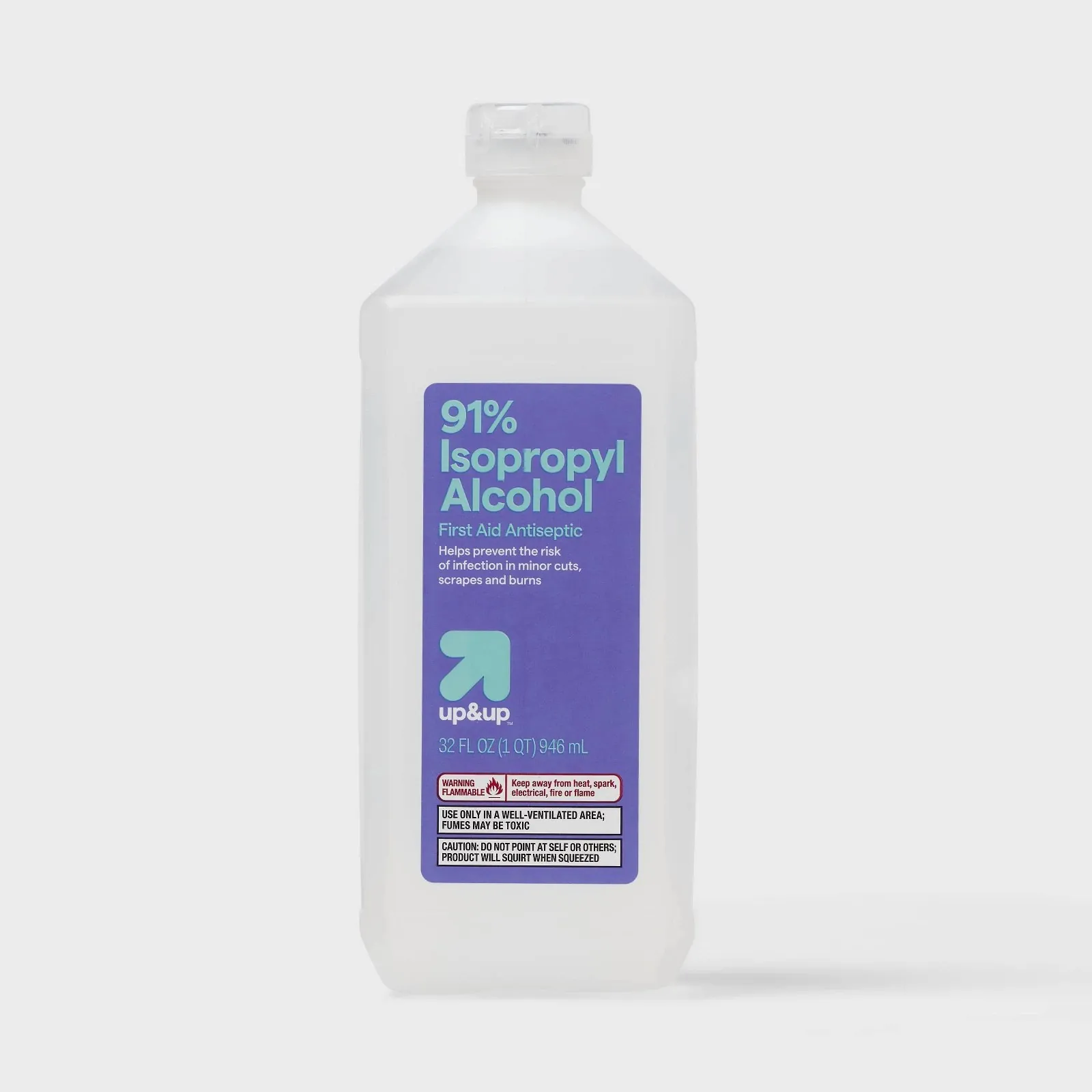
The up&up 91% isopropyl alcohol bottle, from Target's product page.
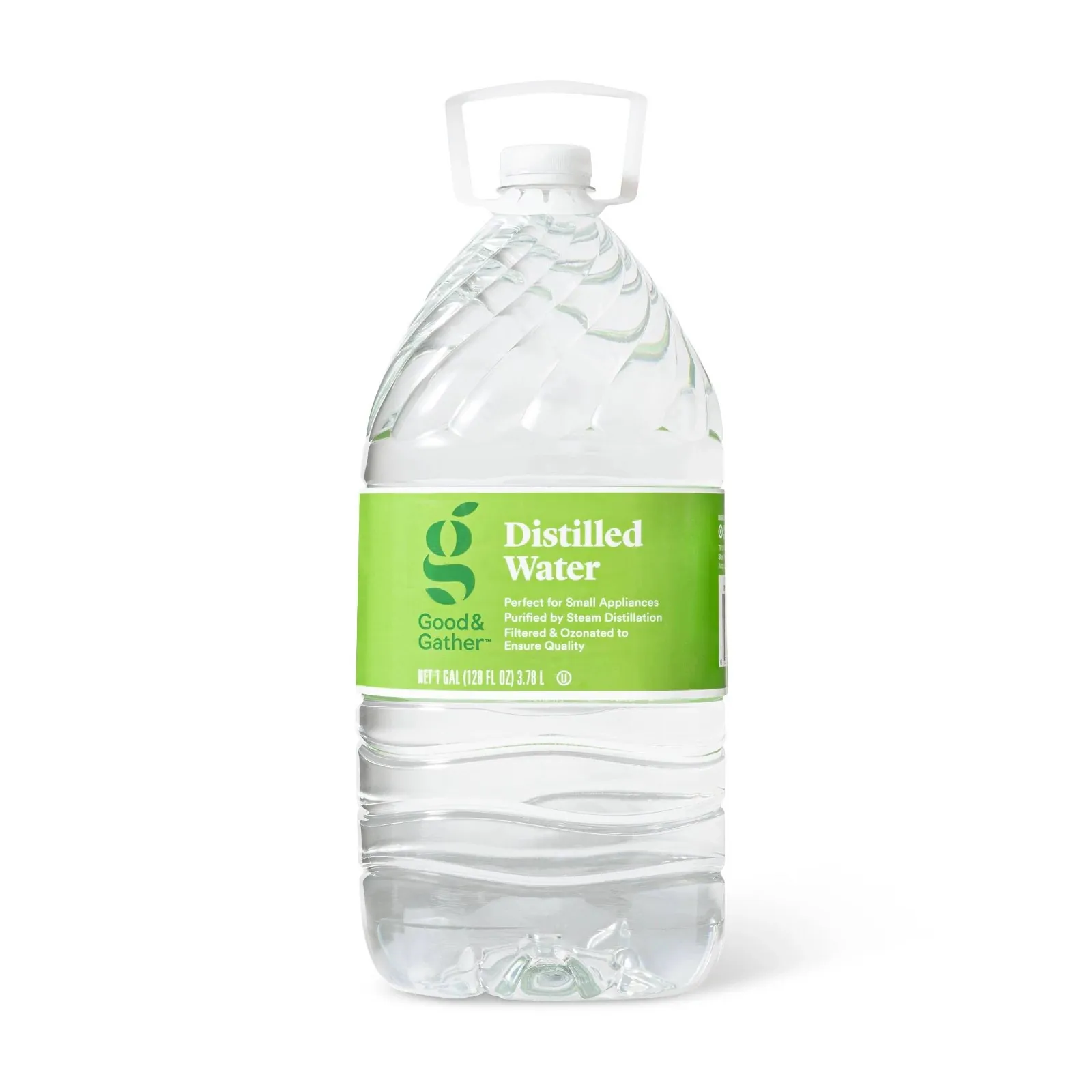
The gallon jug of Good & Gather distilled water, from Target's product page.
Basically, the alcohol dissolves the oily film, dries fast, and leaves nothing behind. The distilled water keeps mineral spots off the glass. And the alcohol mix also works outside on tree sap, wax and oily road film.
For the alcohol, I'd use the up&up 91% isopropyl alcohol 2-pack from Target, which is $7.58 for two 32 oz bottles. Mix the alcohol about half and half with Good & Gather distilled water, which is $1.49 a gallon. That works out to about 6 to 7 cents a car.
Something to note is that no maker or test sets an exact ratio. Half and half is just what detailers commonly use.
Now keep in mind the alcohol smell is strong while the glass is wet, though the smell is gone within minutes. Rubbing alcohol is also flammable while wet, so keep the alcohol mix away from any flame.
And there are two places on a RAV4 where the alcohol mix doesn't belong: the inside of the rear window and the digital rearview mirror's screen. I cover both in the RAV4 warnings section below.
2. ECOS Window Cleaner, Vinegar
ECOS Window Cleaner, Vinegar is the best store-bought non-toxic option with any test behind it. The ingredients are water, plant-derived alcohol, a plant-based cleaning agent called caprylyl/myristyl glucoside, and vinegar. Retailer listings name a slightly different cleaning agent than ECOS's own page, so the formula may have changed.
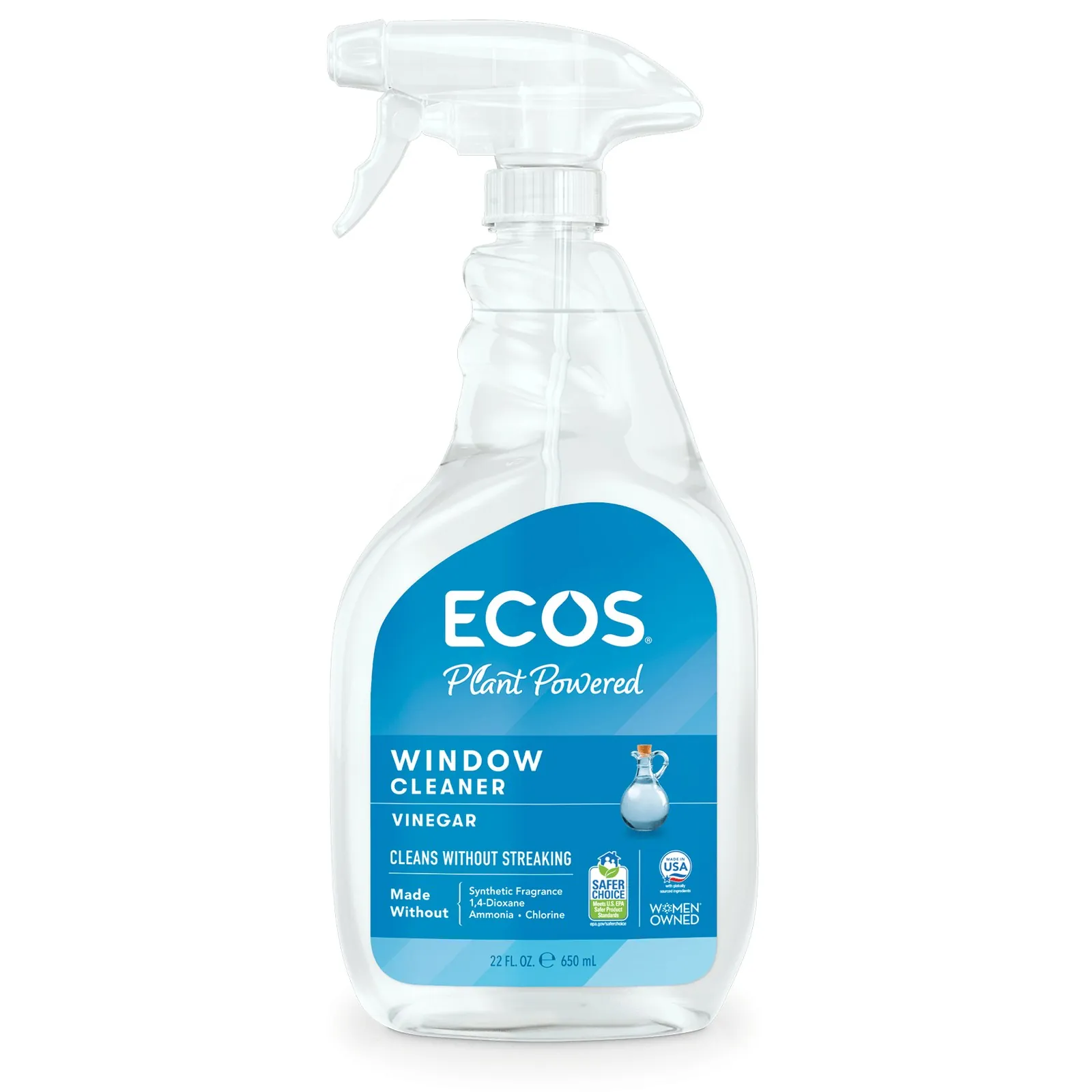
The 22 oz spray bottle of ECOS Window Cleaner, Vinegar, with the Safer Choice logo on the label, from ECOS.
ECOS makes this window cleaner without synthetic fragrance, ammonia or chlorine. And ECOS Window Cleaner, Vinegar is certified by the EPA's Safer Choice program.
In the 2026 Shop TODAY test, one tester smeared lotion and fingerprints on handheld mirrors. ECOS cleaned the mirror in four wipes, the same as Stoner Invisible Glass, which scored highest. The only downside the tester noted was a slight vinegar smell, and ECOS adds no fragrance on top of the vinegar.
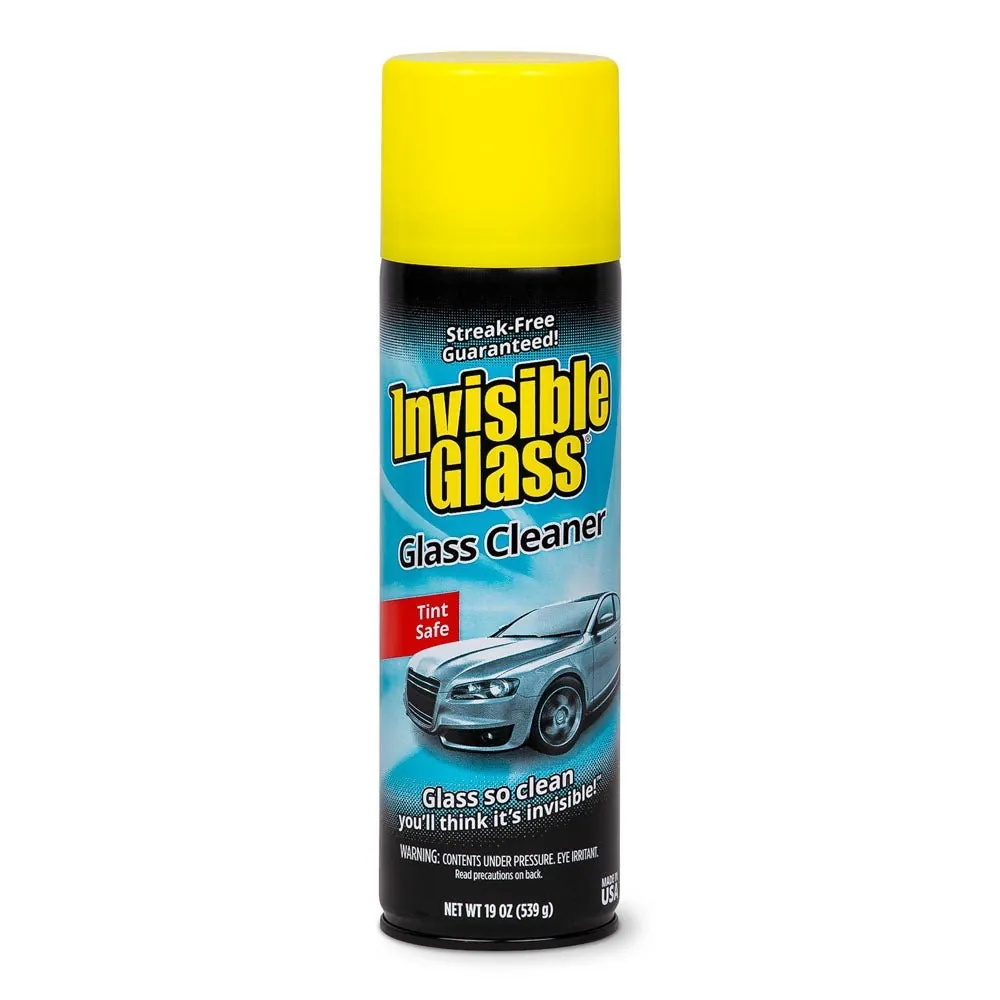
Stoner Invisible Glass in the aerosol can, from Stoner.
And here's my reading of why ECOS does better than plain vinegar. The little bit of alcohol and the mild cleaning agent help ECOS spread across the glass and lift oil. Plain kitchen vinegar has neither the alcohol nor the cleaning agent.
3. Branch Basics Streak-Free
Branch Basics is the store option chemically sensitive users mention most. You make Streak-Free yourself by adding one drop of Branch Basics The Concentrate to a 16 or 24 oz bottle of distilled water. The ingredient list is short, and Branch Basics says the chamomile extract in The Concentrate isn't a fragrance.
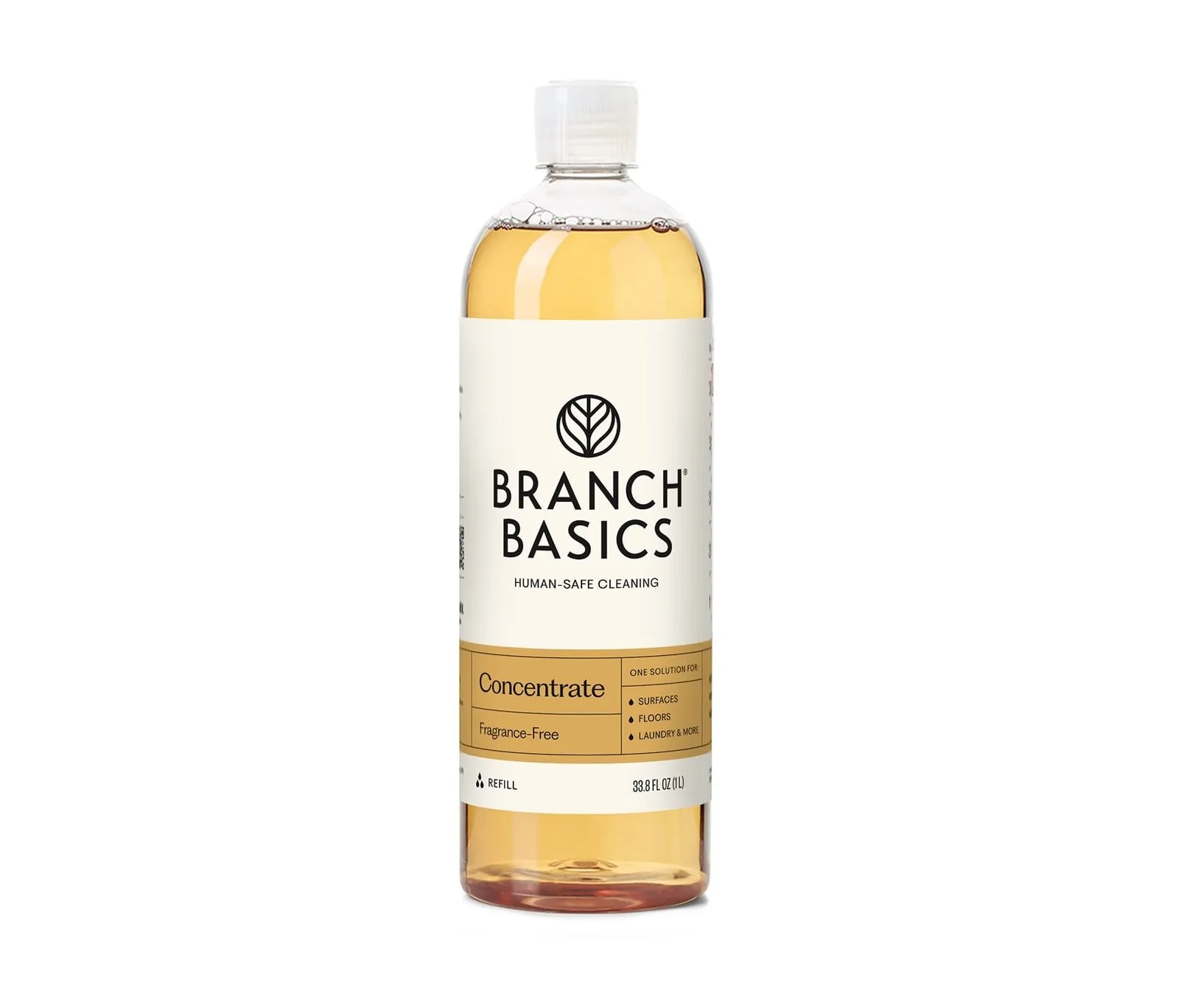
Branch Basics The Concentrate, from Branch Basics.
Basically, one drop in 24 oz is so dilute that, by my reading, Branch Basics Streak-Free is close to distilled water with a trace of mild cleaner. So I'd expect Branch Basics Streak-Free to be gentle on the oily inside film rather than strong.
Branch Basics says Streak-Free works on car windows and windshields. That's the company's claim and no independent test backs it up, but Streak-Free is a reasonable pick if a short ingredient list matters most to you.
The Concentrate costs $55 for 33.8 oz, or $49.50 on a subscription. That's a lot upfront, but at one drop per bottle, the concentrate lasts for years. So the real cost per car is basically the distilled water, about 1 cent.
4. White vinegar and distilled water
Vinegar and distilled water is the cheapest option that still cleans. I'd use Good & Gather white distilled vinegar, which is $3.39 for 64 oz at 5% acidity. Mixed 1 to 1 with distilled water, that's about 3 cents a car.
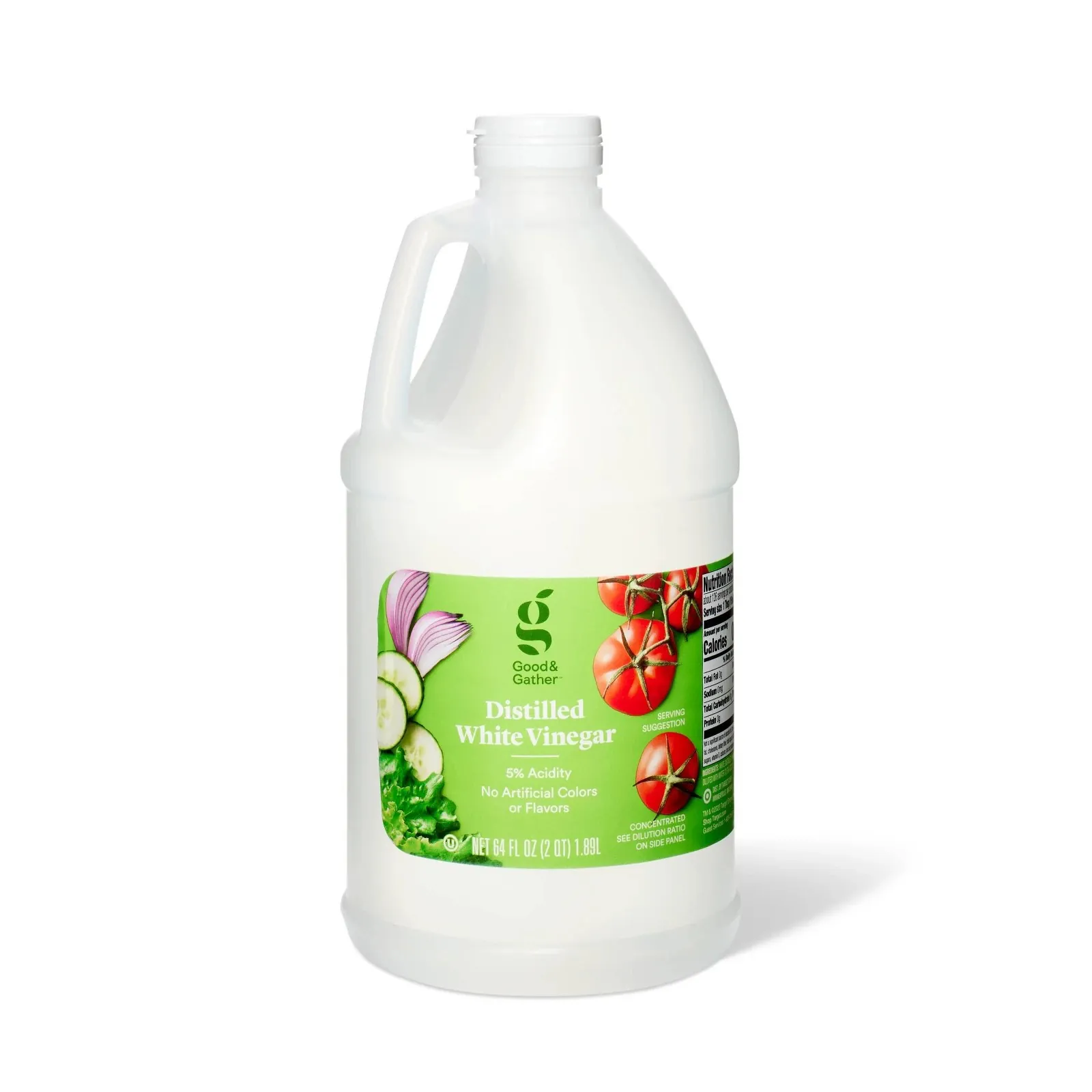
The 64 oz jug of Good & Gather white distilled vinegar, from Target's product page.
Lisa Bronner, from the Dr. Bronner's family, uses the same recipe for windows: fill a spray bottle halfway with white vinegar and top it up with water.
Now the catch is the extra wiping. In Consumer Reports' test, vinegar removed the messes but left noticeable streaks, so it took a lot more wiping than the store cleaners. And one owner who cleaned half a car with vinegar in his own side-by-side video found vinegar cleaned well but needed a second pass to get clear.
Vinegar is also weaker than alcohol on the oily inside haze. And the vinegar smell lasts while you work, though it fades as the glass dries. But otherwise, if you can live with a bit more wiping, vinegar does the job for pennies.
5. Distilled water and a good glass towel
Plain distilled water is the gentlest option of all, and it's Toyota's own method for the inside of the RAV4's rear window. Distilled water with a clean glass microfiber towel is fine for dust, breath fog and light fingerprints. But distilled water will smear the oily inside film rather than lift it, so distilled water is best kept for quick wipe-downs and the rear window.
E-Cloth's Glass and Polishing Cloth ($7.99) is made to clean glass without chemical sprays, and E-Cloth says the cloth lifts streaks and light grease. That's the towel maker's claim and no published test backs it up, but the E-Cloth is a cheap way to try the water-only method.
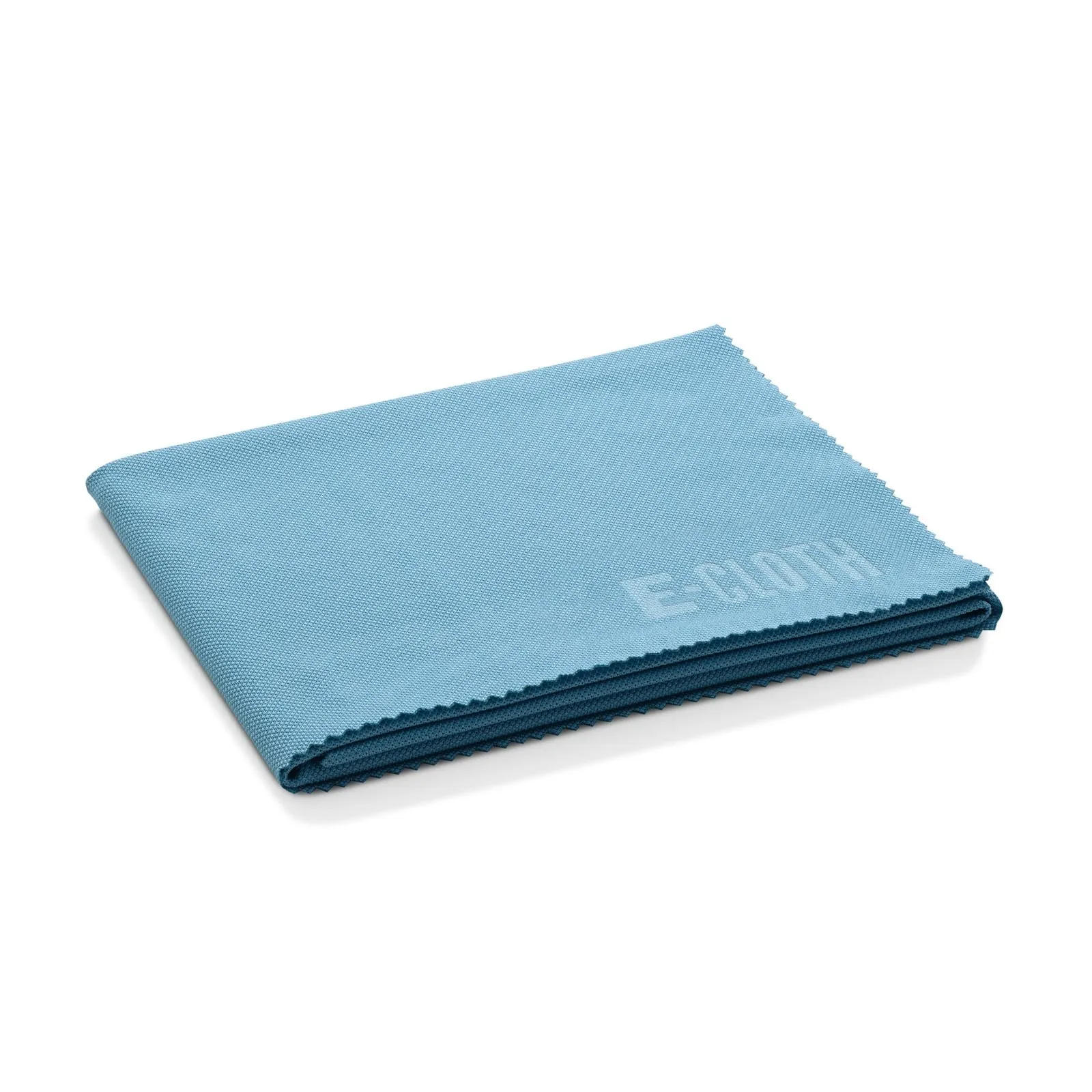
The E-Cloth Glass and Polishing Cloth, from E-Cloth.
The cheapest option that still works well
So ultimately, vinegar and distilled water is the cheapest option that still works well, at about 3 cents a car, if you can live with extra wiping. And if you want fewer passes and the inside haze actually gone, the rubbing alcohol mix is about 6 to 7 cents a car. Both are my own estimates, and both cost less per car than any store cleaner with a known price.
Now as for speed, plain vinegar needs more wiping than a store cleaner, though nobody has timed these methods on a car. And the alcohol method is two passes plus a buff on purpose, but it's the method that actually removes the haze.
What not to mix
Don't mix castile soap with vinegar. Basically, vinegar is an acid and castile soap is a base, so the two cancel each other out. The vinegar breaks the soap back into its oils, and you get a whitish, curdled, oily mess that doesn't clean.
And if you add dish soap to a homemade mix, keep in mind too much dish soap can leave a film that holds dust. Nobody has tested that on car glass, but going light on dish soap costs you nothing.
RAV4 owner's manual warnings for cleaning the glass
Now the RAV4 has a few spots where Toyota's owner's manual changes how you clean. The page numbers below are from the 2023 to 2025 RAV4 Hybrid owner's manual. The rear window and front camera warnings also appear in Toyota's other RAV4 owner's manuals.
- Inside of the rear window: no glass cleaner at all (p.389). Toyota says glass cleaner may damage the rear window defogger's heater wires, the thin lines across the glass. Instead, wipe gently with a cloth dampened with lukewarm water, in strokes that run along the heater wires, being careful not to scratch them. So on the rear window, Toyota's own method is already the non-toxic one.
- Inside of the windshield, by the front camera: keep cleaner off the lens (p.254). The front camera sits behind the windshield at the top, by the rearview mirror. Toyota says not to let glass cleaner touch the camera's lens, or touch the lens yourself, so near the camera, spray the towel, never the glass. And if the inside of the windshield in front of the camera is dirty, Toyota says to contact a dealer (p.253).
- Outside of the windshield in front of the camera: keep it clean (p.253 and p.254). Toyota says to keep the windshield clear of oily film, water drops and snow. Even with a glass coating on the windshield, you still need the wipers working in front of the camera. If the wipers can't clear that area, Toyota says to replace the wiper insert or blade.
- A blocked front camera can switch off the safety systems for a while (p.255). When dirt, fog or ice covers the area in front of the camera, a message can say systems like PCS are unavailable. My PCS and radar cruise unavailable guide covers that message.
- Set the wipers to OFF before cleaning the windshield (p.385). If the wiper switch is in AUTO, the rain-sensing wipers can start on their own when you touch the windshield or wipe near the sensor. Toyota warns the wipers can catch your hands and damage the wiper blades. My rain-sensing wipers guide explains how AUTO works.
- Set the wipers to OFF before an automatic car wash too (p.386). My car wash checklist covers the other settings to change before a car wash.
- Digital rearview mirror: no alcohol on the mirror (p.177). If your RAV4 has the digital rearview mirror, Toyota says not to clean the mirror with thinner, benzene or alcohol, because they can discolor or damage the mirror surface. Clean the digital rearview mirror's camera lens with a damp soft cloth, without rubbing hard. My digital rearview mirror guide goes through cleaning the camera.
- Keep drips off the dashboard and seats (p.388). Toyota says not to use acidic or alkaline solutions on the RAV4's interior trim other than the seats, or alcohol on the seats. Vinegar counts as acidic, so spray the towel instead of the glass to keep drips off the trim and seats.
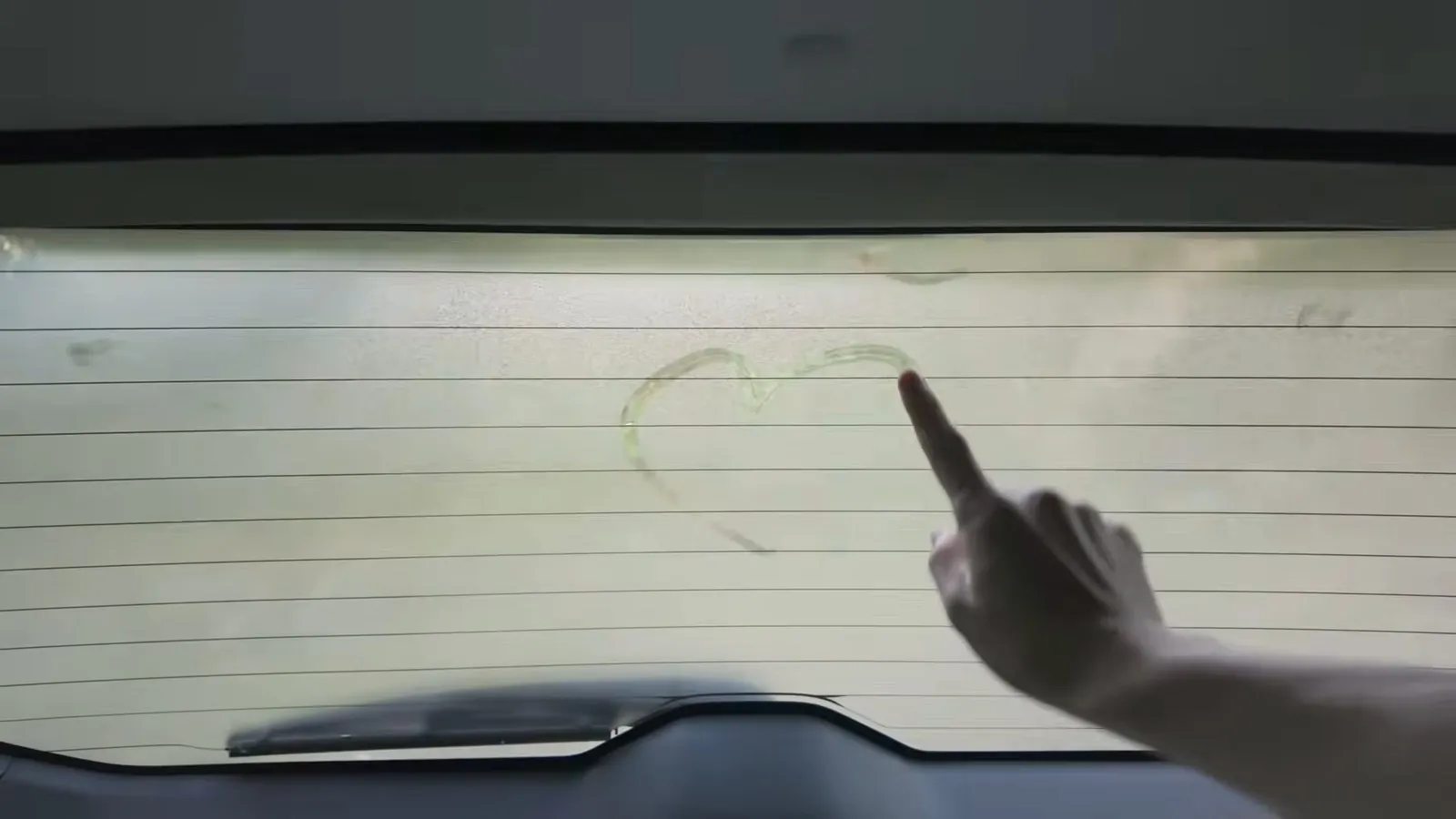
The thin defogger heater wires across the inside of the rear window on Max D Rocks' 2026 RAV4 Woodland, the lines Toyota says to wipe along with just lukewarm water, from Max D Rocks' video.
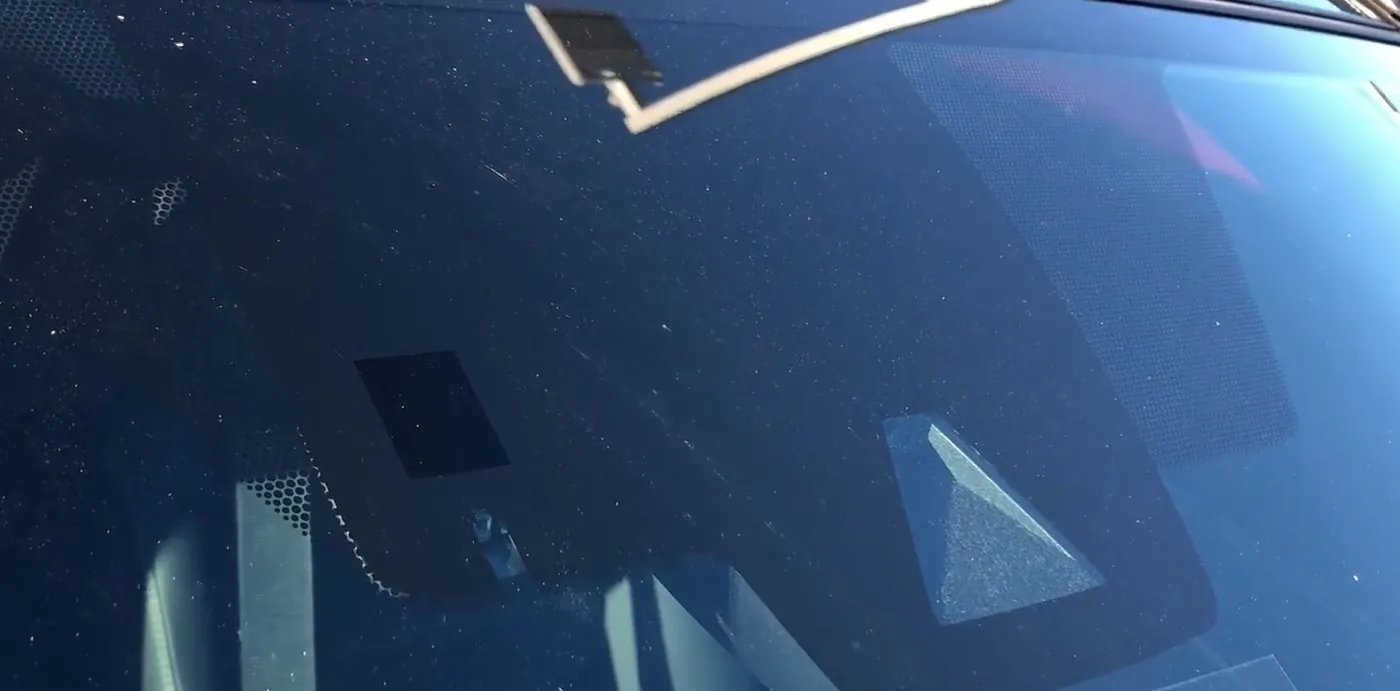
The top center of a 2020 RAV4 windshield, with the rain sensor on the left and the front camera's triangle window on the right, from ToyotaJeff Reviews' video.
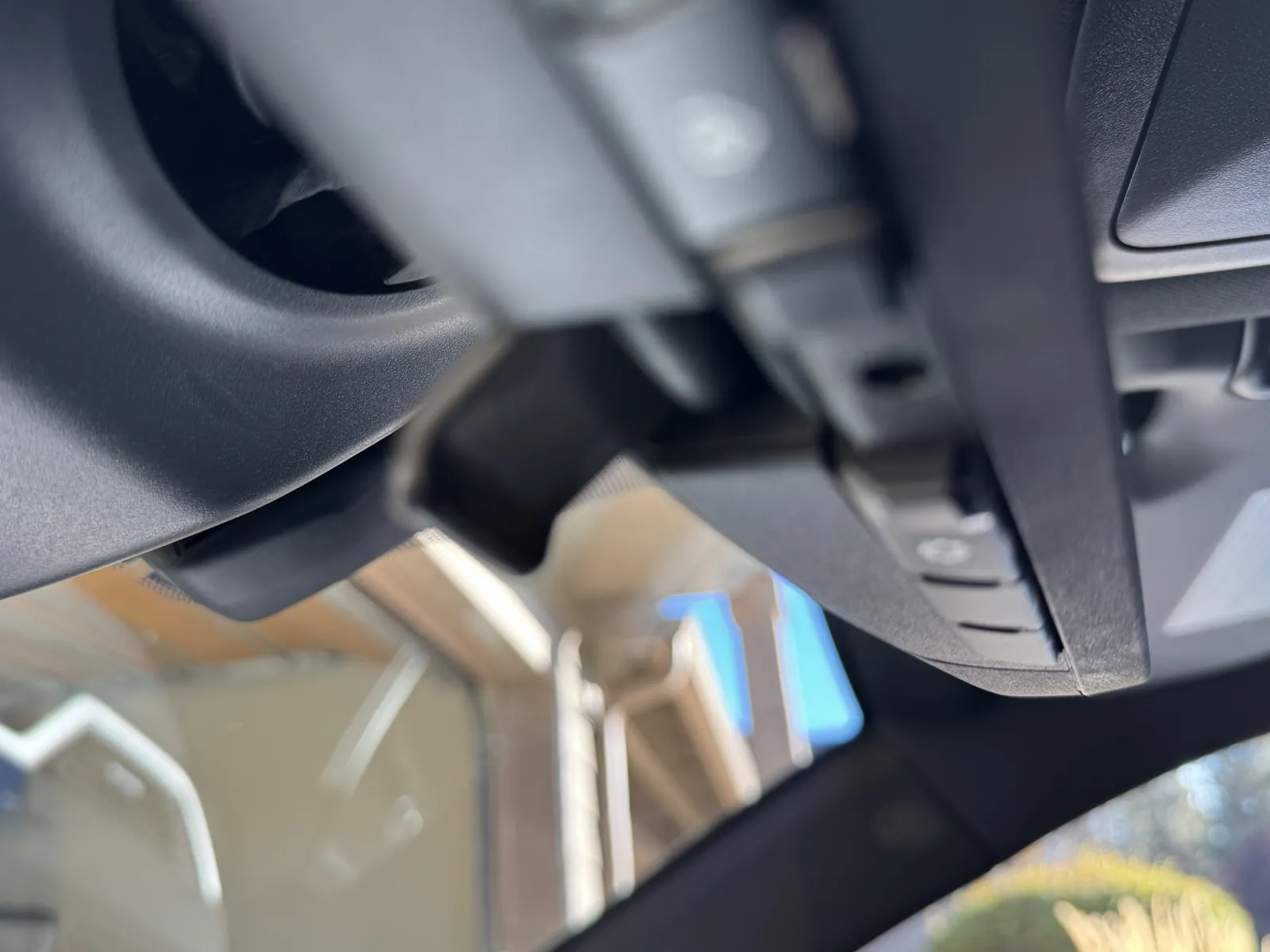
The front camera housing behind the rearview mirror, seen from inside my 2025 RAV4 Hybrid XSE.
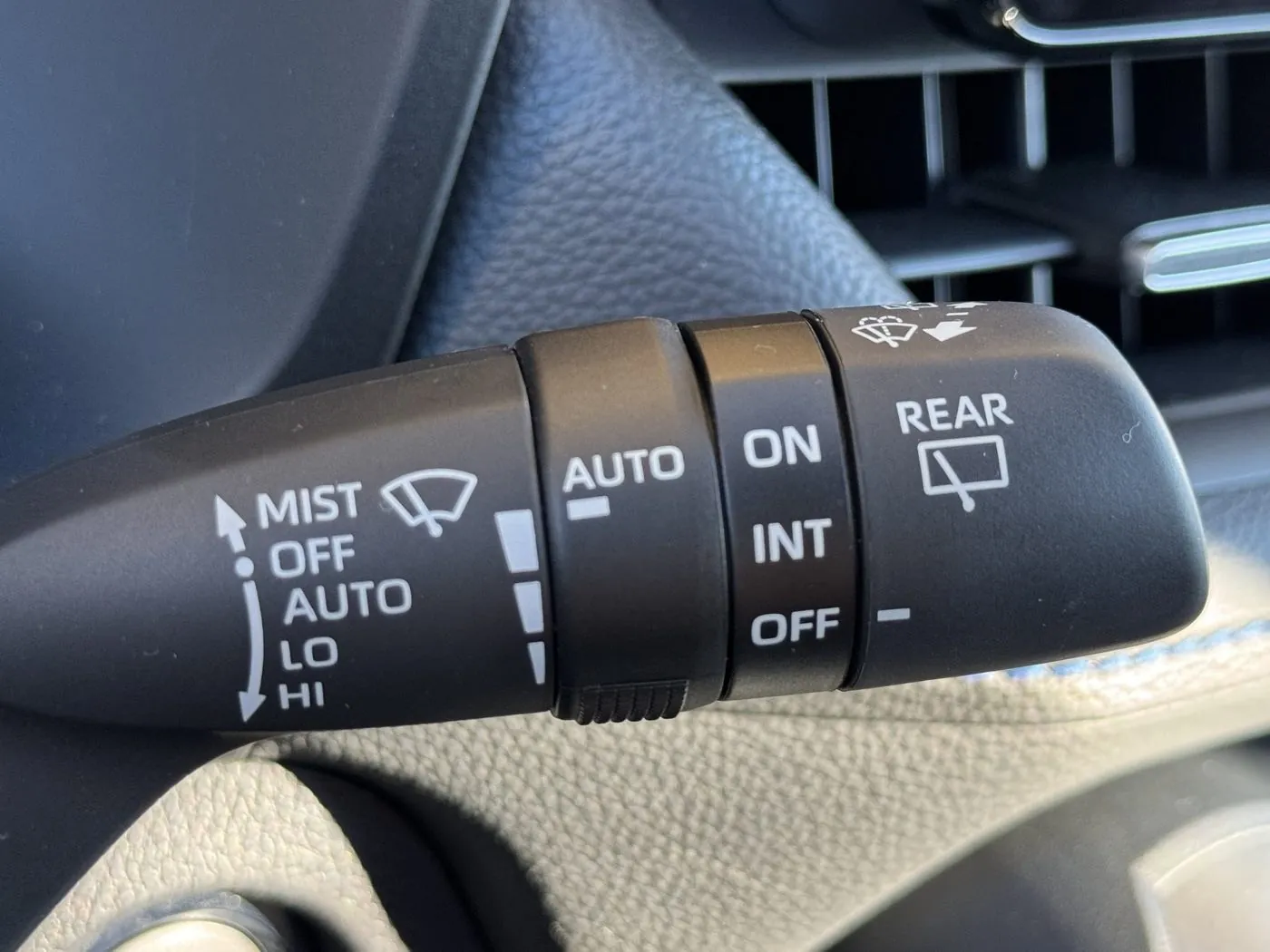
The wiper stalk on my 2025 RAV4 Hybrid XSE, with OFF and AUTO on the lever, so you can see where to set it before cleaning the windshield.
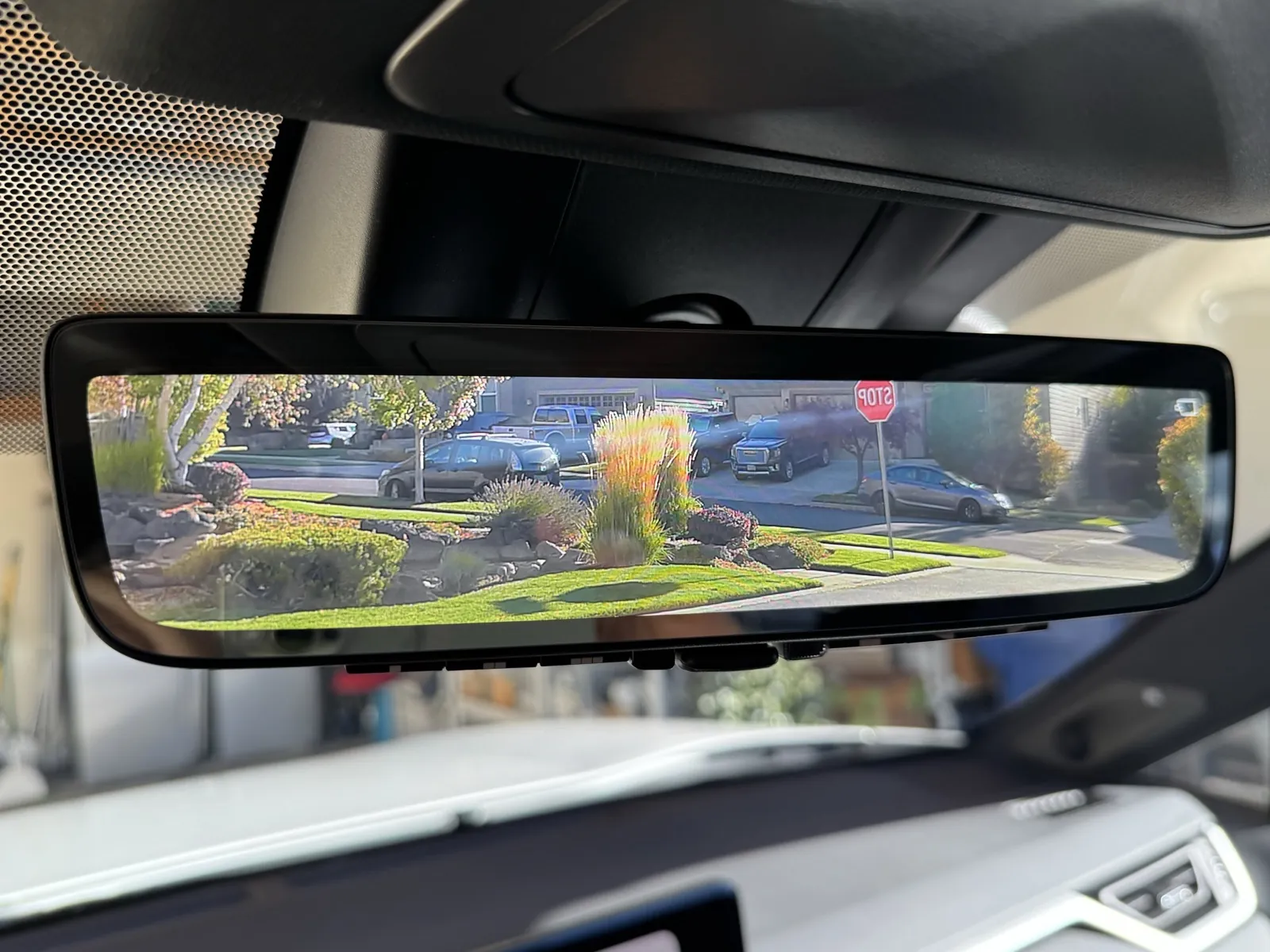
The digital rearview mirror in my 2025 RAV4 Hybrid XSE in camera mode, the screen Toyota says to keep alcohol off.
And for fog and frost on the windshield, my RAV4 winter prep guide covers the fastest way to clear it.
How to clean RAV4 glass without streaks
Now whichever option you pick, the way you wipe matters about as much as what's in the bottle. Here's the method detailers agree on.
- Clean the outside first. That way you can tell whether any film you still see is on the inside.
- Spray the towel, not the glass, inside the RAV4. That keeps the cleaner off the dashboard and away from the front camera.
- Use two towels. Wipe with the first towel, then buff with a second clean, dry towel.
- Wipe one direction inside and the other direction outside. Go side to side inside and up and down outside. That way, a leftover streak's direction tells you which side of the glass the streak is on.
- Use a little cleaner and do more passes. More product doesn't clean better.
- On a humid day, wait before you buff. Wipe, wait 30 to 45 seconds for a light haze, then buff with a fresh dry towel. That's how Wilson Auto Detailing handles humid days.
- Check your work at a low angle against the light. Streaks and haze show up best when light hits the glass from the side.
- Give the hard-to-reach edges extra attention. Work the lower corners of the windshield by the dashboard. And roll each side window down an inch to reach the top edge of that window.
The best towels for car glass, and paper towels
Now regarding towels, a waffle-weave glass towel is the detailers' favorite for car glass. Basically, the raised squares absorb well, cut down on drag, and rarely leave lint. The waffle-weave towel users recommend most is The Rag Company's Dry Me A River, and I'd keep two of them just for glass.
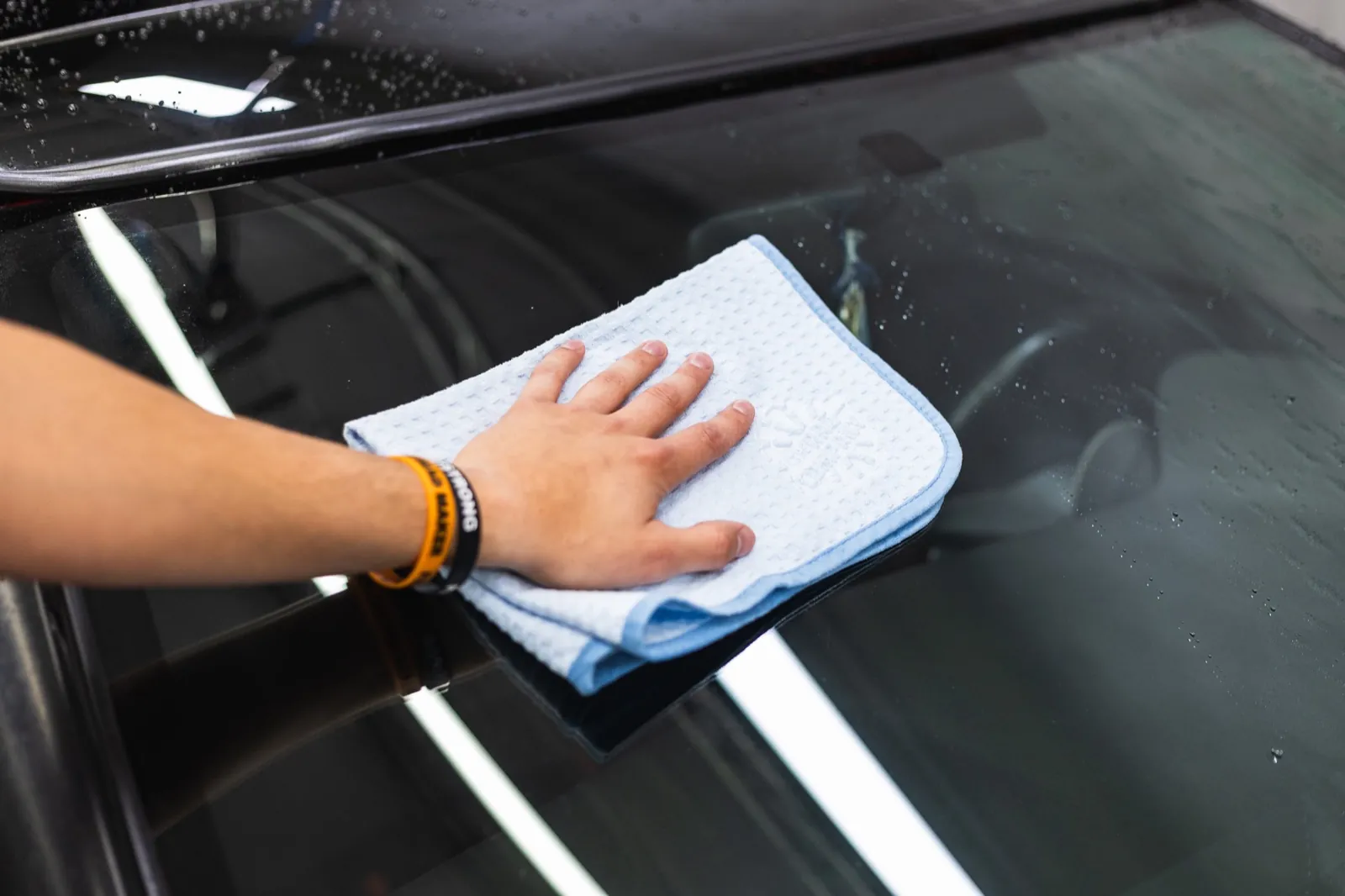
The Rag Company's Dry Me A River waffle-weave towel being wiped across a windshield, from The Rag Company's product page.
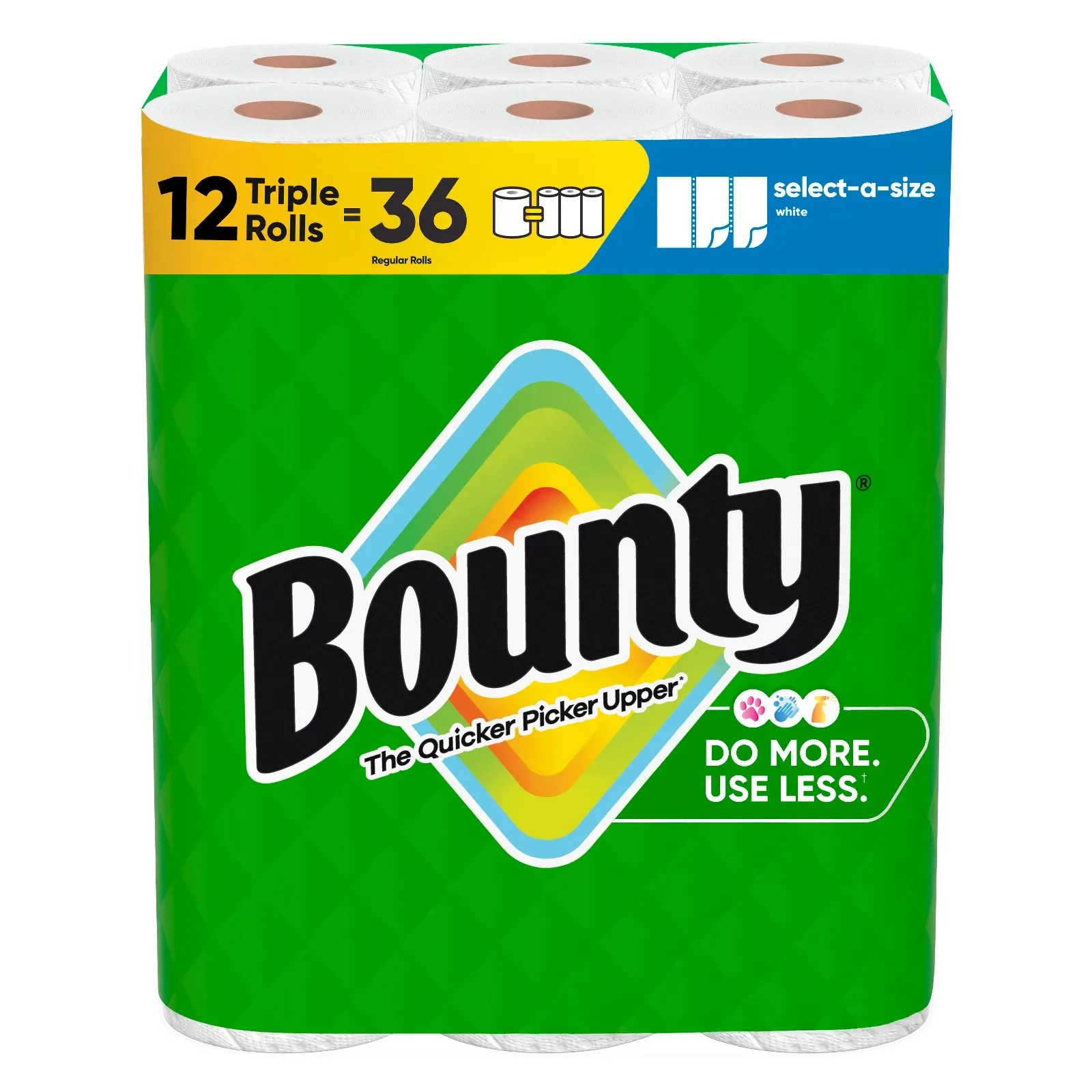
A pack of Bounty Select-A-Size paper towels, from Target's product page.
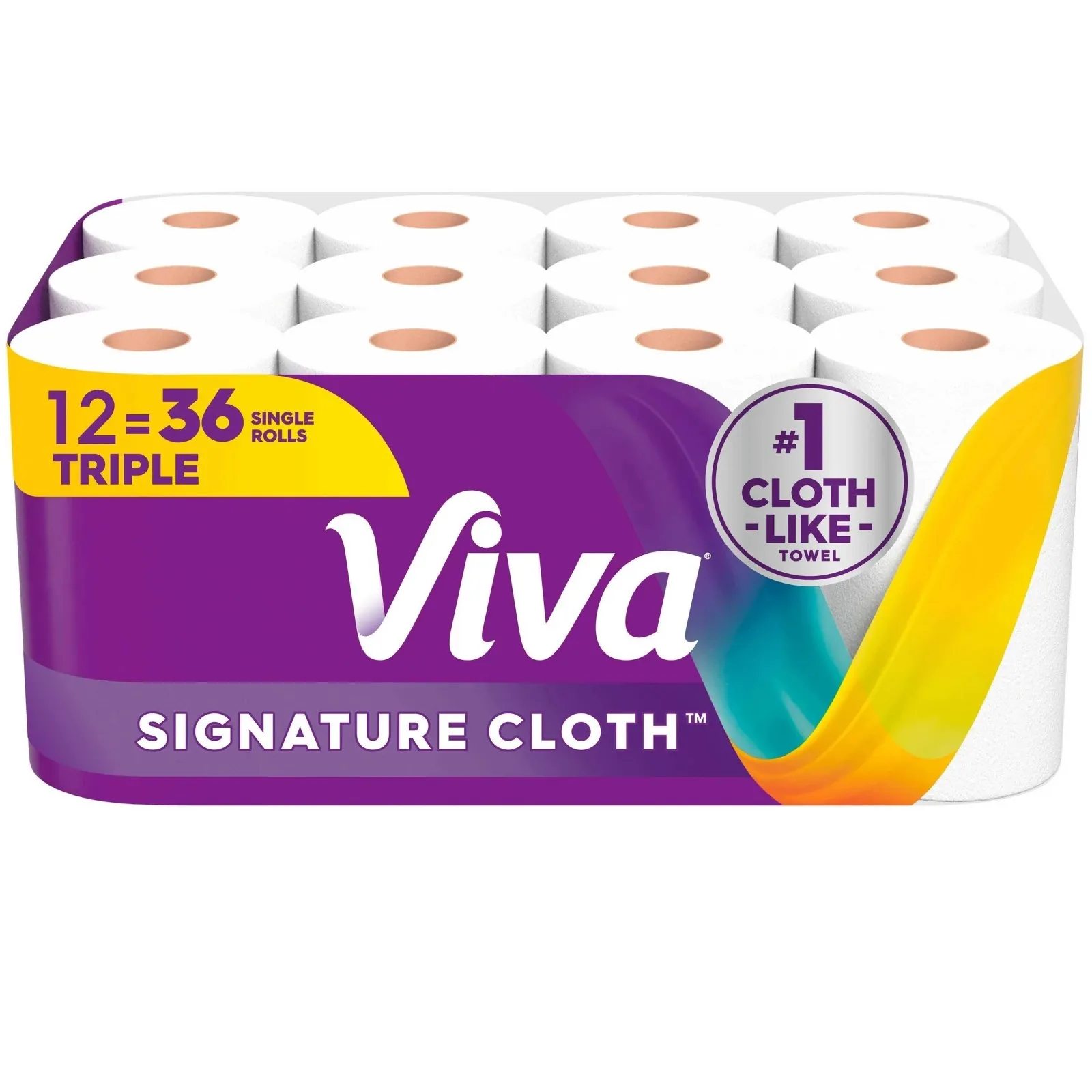
A pack of Viva Signature Cloth paper towels, from Target's product page.
Keep in mind plush microfiber towels are more likely to leave lint, especially after the heat of a dryer. So wash glass towels only with other glass towels, using a little fragrance-free detergent. Skip fabric softener and dryer sheets, because they coat the fibers and cause streaks.
And air dry glass towels or use low heat. Autofiber, a towel maker, also adds distilled white vinegar to the rinse to clear out leftover detergent.
And if you'd rather use paper towels, the closest test is America's Test Kitchen's paper towel review, which checked for streaks and lint on household glass. Nobody has tested paper towel brands on car glass. The co-winners were Bounty Select-A-Size and Viva Signature Cloth.
Keep in mind detailers skip paper towels for the inside haze, and save the waffle-weave towel for that job.
Newspaper doesn't work on glass as well as it used to. Modern newspaper is thinner, tears and leaves lint, and the soy ink can smear onto your hands and trim. So a waffle-weave towel is the better pick.
What to know about common glass cleaners if you're sensitive
So if strong smells or certain ingredients bother you, here's what's actually in the glass cleaners you'll see on the shelf. First comes what the labels and safety sheets show, and then what chemically sensitive people report.
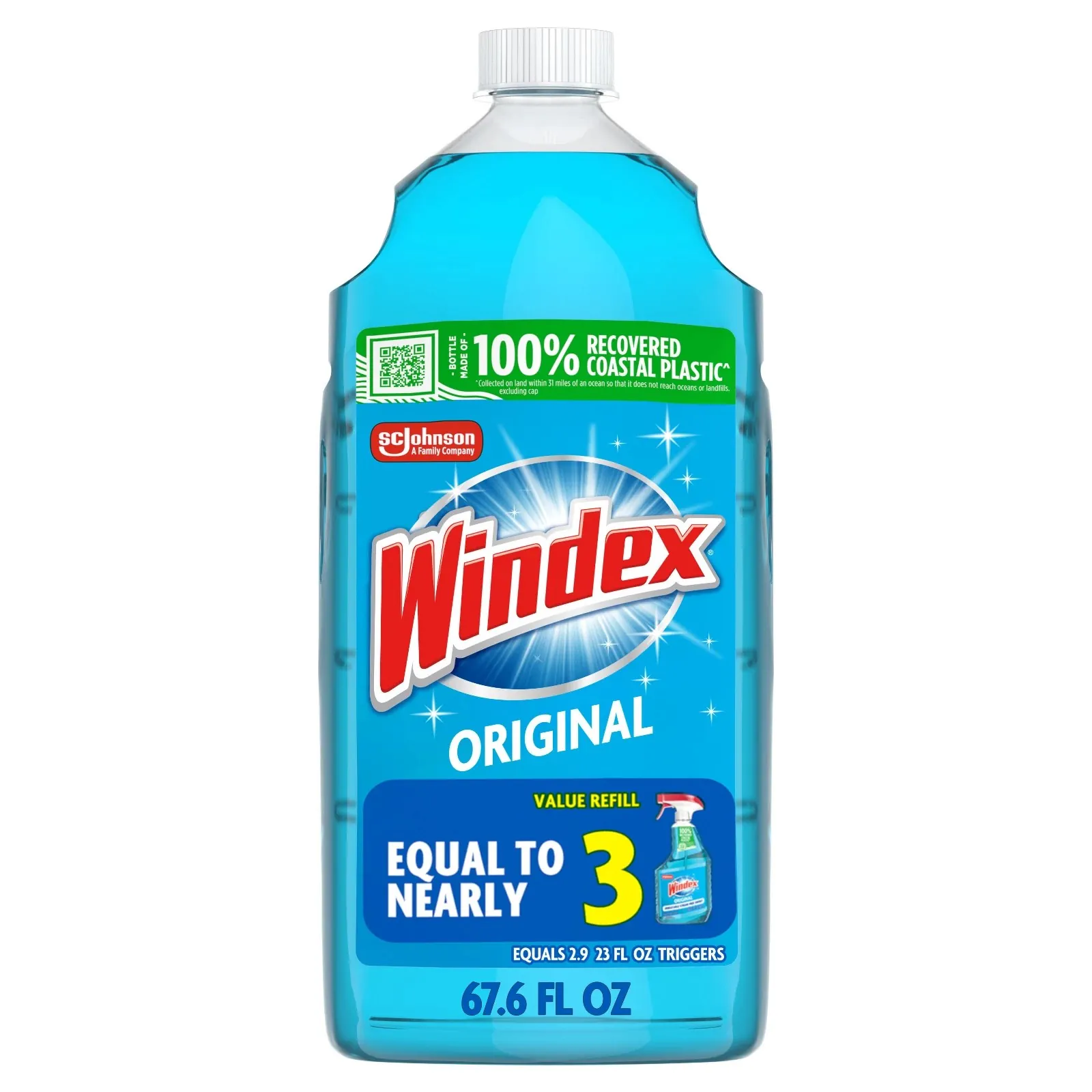
The Windex Original refill bottle, from Target's product page.
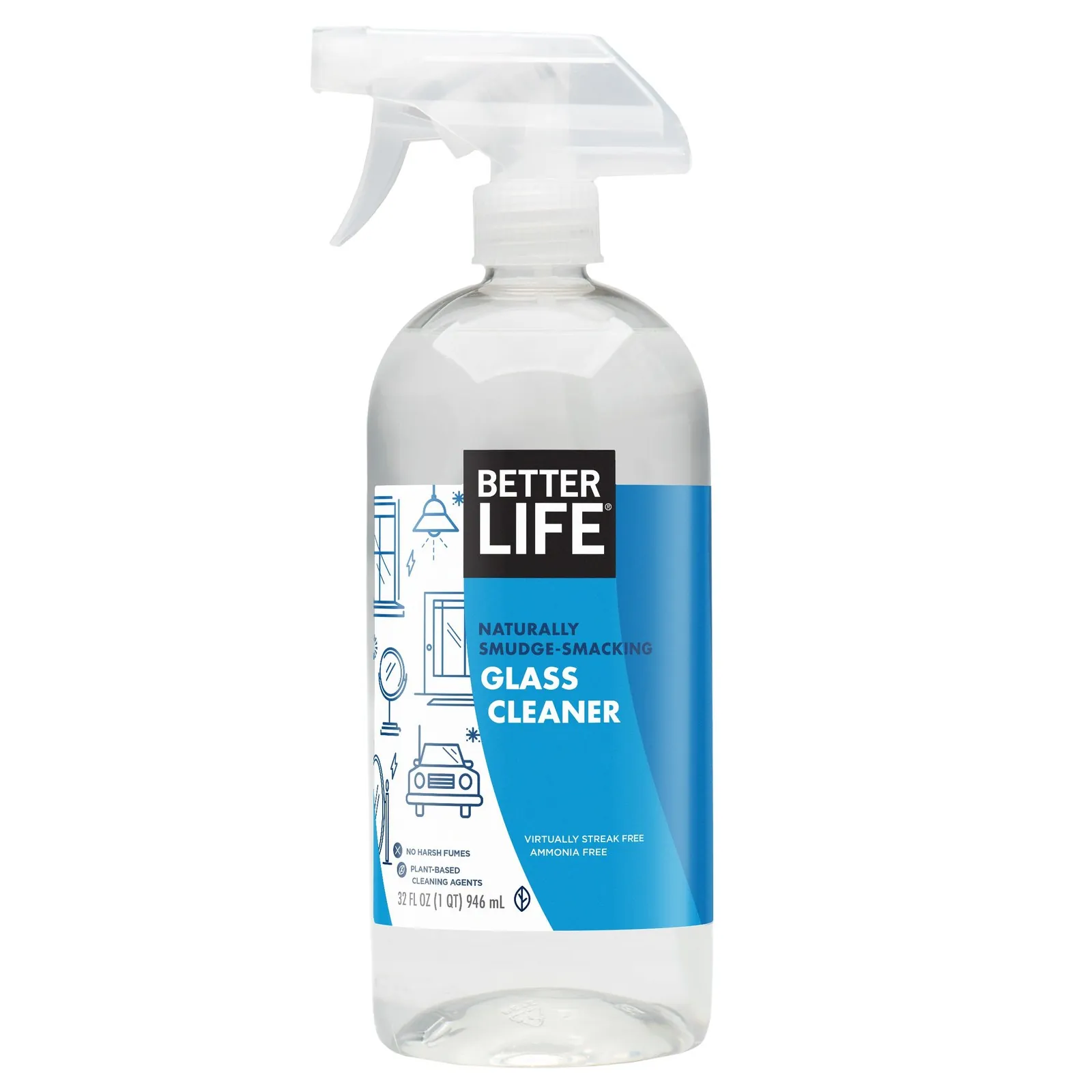
A 32 oz bottle of Better Life glass cleaner, from Better Life's product page.
- Windex Original has ammonia, fragrance and dye. The Windex Original refill at Target lists water, hexoxyethanol, isopropanolamine, ammonium hydroxide (ammonia), cleaning agents, colorants and fragrances. It's worth noting that the current Windex Original label lists hexoxyethanol, not 2-butoxyethanol. So articles saying Windex contains 2-butoxyethanol may be out of date.
- Sprayway's ammonia-free foam has solvents and a scent. Sprayway Foaming Action Ammonia Free Clean Fresh lists isopropyl alcohol, methoxyisopropanol, lauroyl sarcosine and morpholine. It won Consumer Reports' test, but it's scented, and it had the strongest chemical smell in the Shop TODAY test.
- Stoner Invisible Glass works very well, but it isn't a non-toxic choice. Stoner Invisible Glass is Consumer Reports' pick for a plain glass cleaner and the bottled spray users recommend most. But its safety data sheet names only water and a "proprietary hydrocarbon blend," so the main cleaning ingredient isn't named. The safety data sheet also rates Invisible Glass as a highly flammable liquid that causes serious eye irritation, and it notes Invisible Glass can aggravate asthma-like conditions.
- "Free & Clear" and "Unscented" don't always mean free of irritants. Retailer listings for Seventh Generation Free & Clear Glass Cleaner show two isothiazolinone preservatives, which are known skin allergens, though the current bottle's label may differ. And Better Life's Unscented Glass Cleaner lists essential oils on its own page.
Now as for what chemically sensitive people report, a patient charity for people with aspergillosis suggests skipping vinegar if the smell bothers you. The charity also suggests testing 70% rubbing alcohol for sensitivity first, and warns that "natural" products with essential oils can still set off reactions.
So vinegar isn't automatically safe for every sensitive person, and the same goes for alcohol.
And Mamavation's 2022 glass cleaner review, from a non-toxic advocacy site, rated Branch Basics best. It rated ECOS, Seventh Generation Free & Clear and Better Life Unscented good, with some issues, and put every Windex and Sprayway on its avoid list. Keep in mind Mamavation scores ingredient lists, not how well a cleaner cleans.
What the certifications on the bottle do and don't mean
- EPA Safer Choice glass cleaners have to pass a cleaning test. The 2024 Safer Choice standard requires a glass cleaner to score at least 3 for cleaning, streaking and smearing on industry tests. The test proves a passing score, but it doesn't rank products. And the EPA reviews every ingredient against health and environmental criteria and limits fumes.
- Safer Choice doesn't mean fragrance-free. Scented products can carry the Safer Choice label, as long as the fragrance meets EPA's criteria. Only EPA's separate fragrance-free mark rules out fragrance.
- "Unscented" isn't the same as "fragrance-free." Under the EPA's fragrance-free criteria, "unscented" products can still contain masking chemicals that cover up odors. And the EPA says many fragrance materials are linked to allergic reactions and lack safety data.
- EWG Verified doesn't mean fragrance-free either. Attitude Window & Glass Cleaner ($6.95 for 27.1 oz) is EWG Verified, and it still lists fragrance.
- The Safer Choice program now runs on a very small staff. As of June 2025, Safer Choice survived an EPA reorganization with fewer than a dozen staff.
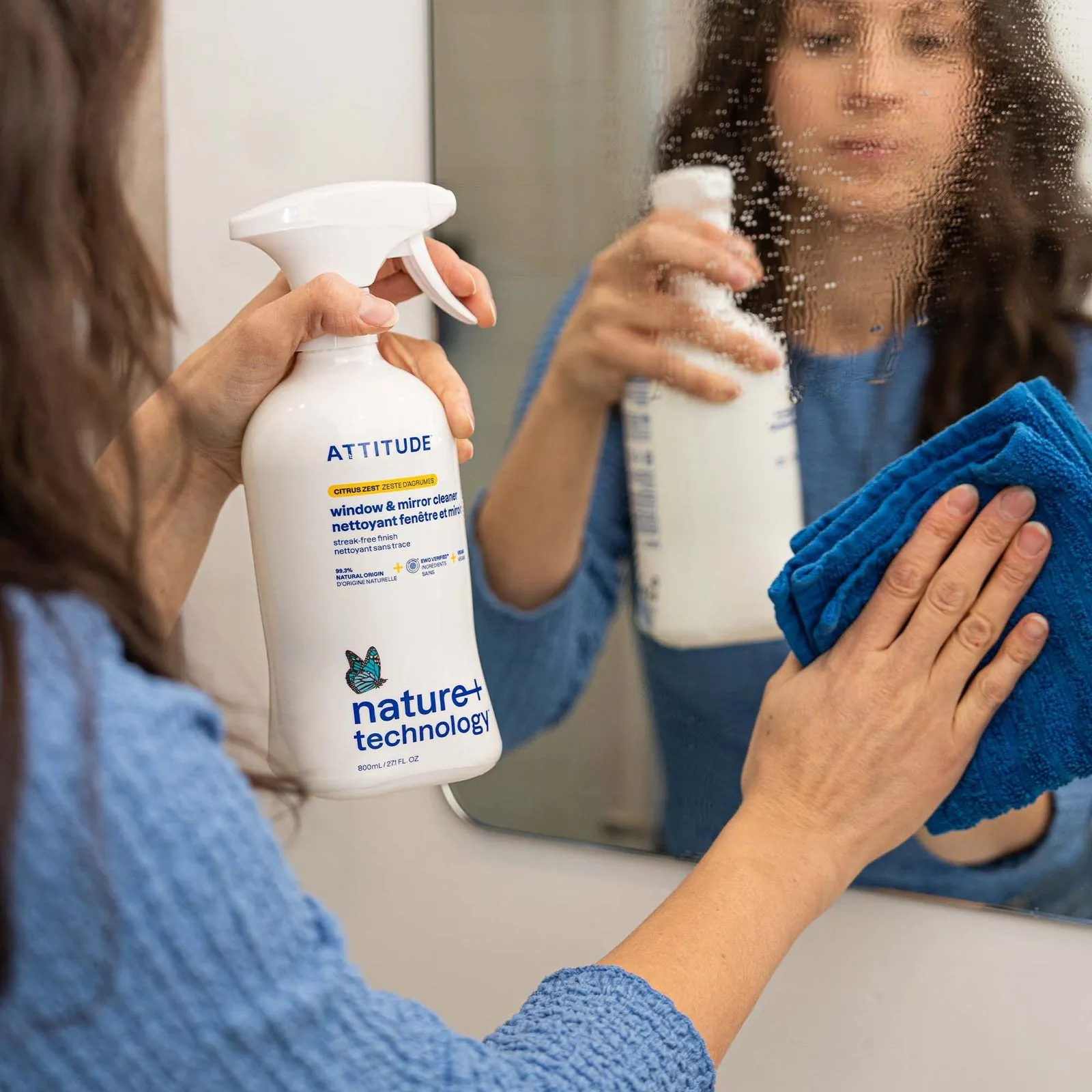
Attitude's window and mirror cleaner in use on a mirror, from Attitude.
So ultimately, these labels screen ingredient lists, but none of them measure how a sensitive person actually reacts in a closed car. That means what bothers you personally is the real test.
Cleaning the outside of the glass: gentlest first
And then on the outside, match the method to the dirt, and start with the gentlest step. Here's the order to try each step, from gentlest to strongest.
- Wash the glass with the rest of the RAV4. Use car soap and water, dry the glass, then use any option from the ranking above. That handles everyday road dust.
- Soak dried bugs. Owners report that laying a wet towel over dried bugs for 15 to 30 minutes softens them enough to wipe off. It's slow, but it costs nothing and beats scrubbing.
- Use the alcohol mix for sap and road film. Spray half isopropyl alcohol and half water on tree sap, let the mix soak for up to a minute, then wipe gently. The same mix works on oily road film and wax.
- Use a clay bar for gritty, bonded dirt. A clay bar with glass cleaner as the lube makes the glass smooth. In Out of Spec Detailing's 2024 side-by-side test on hard water spots, clay helped only a little.
- If nothing gentle works, use car polish by hand. In the same test, car paint polish rubbed in by hand cleared most baked hard water spots quickly.
- If nothing gentle works and car polish doesn't clear the spots, use an acid water spot remover. Acid water spot removers made the biggest difference in the Out of Spec Detailing test. But keep in mind they aren't non-toxic, and they have to be washed off afterward. A cerium oxide glass polish is the last resort for the worst spots.
And skip the 0000 steel wool that's often suggested for water spots. It did almost nothing in the Out of Spec Detailing test, and it risks scratching the glass. Glass cleaner and vinegar didn't touch the baked spots either, which is why car polish and an acid remover sit at the end of the list above.
Window tint and ammonia
So if you've added aftermarket tint film, wait about 1 to 5 days after the tint goes on before cleaning it. That's the wait XPEL, a tint film maker, gives, and after that XPEL says mild, non-ammonia glass cleaners are fine. Stoner says the same about ammonia.
No published test shows ammonia actually damages modern film, but every option in my ranking is ammonia-free anyway. And Toyota says not to put tint film on the RAV4's windshield (p.254), or on the rear glass in front of the digital rearview mirror's camera (p.177).
Washer fluid: what's in the blue stuff
Now typical blue winter washer fluid is mostly methanol and water. Prestone De-Icer Winter Windshield Washer Fluid is 20 to under 35% methanol, according to its safety data sheet.
Prestone's safety data sheet says the De-Icer fluid may be fatal or cause blindness if swallowed. The sheet also says swallowing it, breathing it or absorbing it through the skin may affect the nervous system and damage the optic nerve.
Europe bans washer fluid with 0.6% or more methanol from being sold to the public, after poisonings from people drinking washer fluid in seven countries. A 2017 UMass study lists drowsiness, nausea, headache and confusion from high methanol vapor levels. But that study is about workplace-level exposure, and no published measurement shows how much methanol gets into a car from using the washer.
Now in summer, plain distilled water is the cleanest option, and the RAV4 owner's manual lists plain water as an option, with washer fluid containing antifreeze for winter use (p.397). But there's no confirmed methanol-free winter washer fluid sold by a major US store.
People on a homesteading forum have proposed homemade winter mixes, but nobody there reports using one through a whole winter. And Toyota says not to use soapy water instead of washer fluid, because soapy water can streak the paint and damage the washer pump (p.406). So in winter, washer fluid with antifreeze is still what the RAV4 owner's manual calls for (p.397).
Also, on the RAV4 Hybrid, Toyota says not to add washer fluid while the hybrid system is hot or running. Washer fluid contains alcohol, and it can catch fire if spilled on the hybrid system (p.406). My winter prep guide covers winter washer fluid and wiper blades.
Buddy's take
So ultimately, if you want the inside haze gone with nothing harsh, I'd go with rubbing alcohol and distilled water, about half and half. Then buff the glass dry with a waffle-weave towel. If you'd rather buy a bottle, ECOS Window Cleaner, Vinegar is the store option with a test behind it.
And if you're on a tight budget, vinegar and distilled water costs pennies, as long as you don't mind extra wiping. Just keep in mind that on the RAV4 specifically, glass cleaner stays off the inside of the rear window, and lukewarm water is all you use there. Near the front camera, spray the towel instead of the glass, and set the wipers to OFF before you start.
So hopefully this helps you get clear glass without the harsh smell. And if you have a question, feel free to email me at contact@ravbuddy.com. I read as many messages as I can, and your questions help me improve these guides.
Have a question about “How to clean your RAV4's windshield and windows without harsh chemicals, and what works best”?
Ask it here. Every question comes to me first. I answer as many as I can, and each answered question goes on this page with my answer so other RAV4 owners can see it too. I don't ask for your email, so check back on this page for the answer.
More owner guides
The 2026 RAV4 touchscreen made simple: what's where, what still has buttons, and how to fix the common problems
If the dealer handed you the keys to a 2026 RAV4 and never showed you the screen, this guide walks through the screen by trim, the buttons, the home screen, the quick controls, driver profiles, "Hey Toyota" and the software updates.
How to stop the RAV4 360 camera from popping up, and how to use its views
The RAV4's 360-degree camera can take over your map every time you slow down. Here's how to stop the 360 camera from popping up on the 2019 to 2025 and 2026 RAV4, and how to use each camera view when you actually want it.
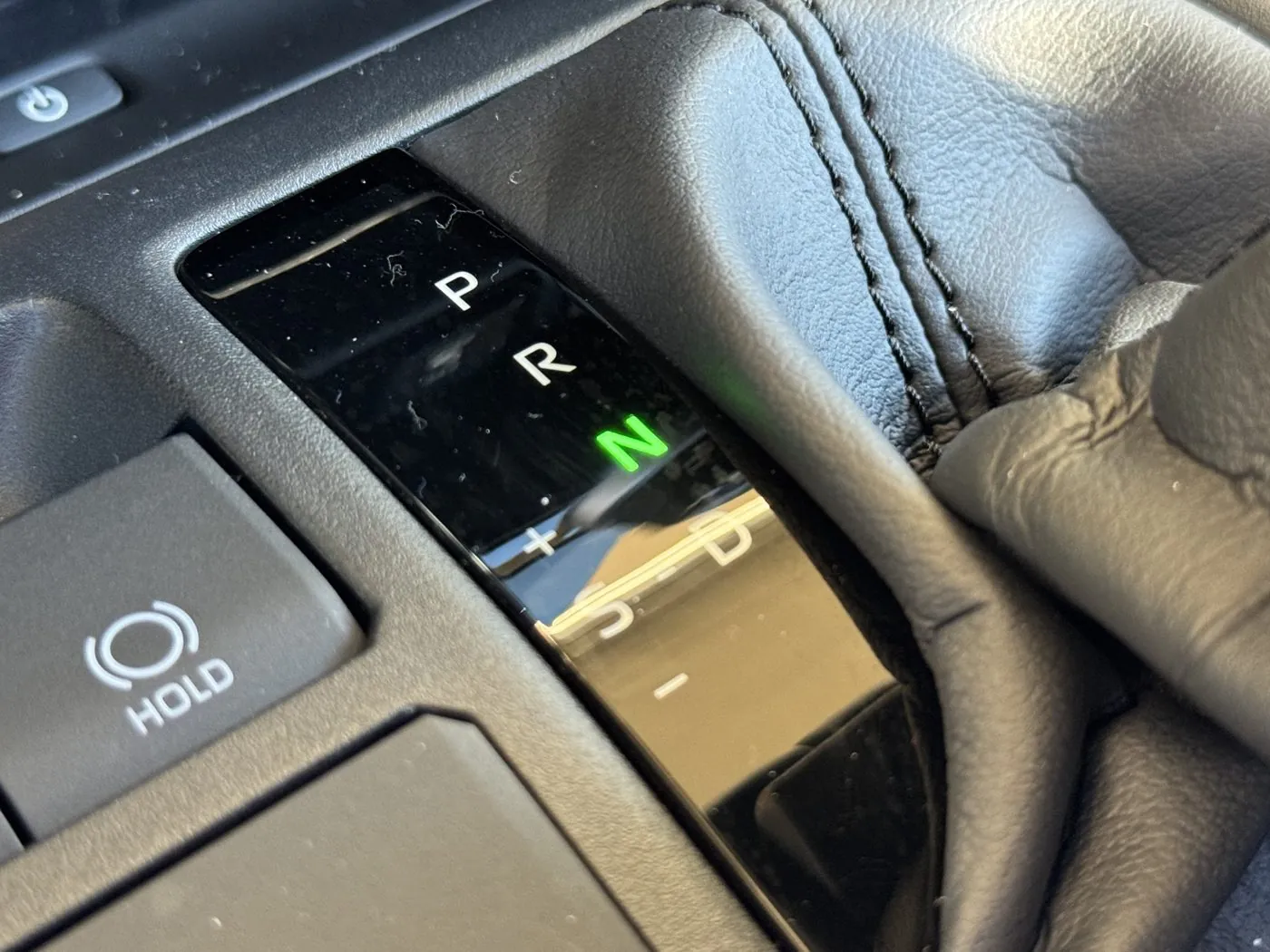
How to take your RAV4 through an automatic car wash
A short checklist of what to turn off before a conveyor car wash, and where each button is. Plus how to keep a 2019 to 2025 or 2026 RAV4 in neutral from start to finish.
The dealer GPS tracker in your RAV4: what it does, where it is, and how to remove it
What the plug-in GPS tracker some Toyota dealers add actually does, whether it can shut off your RAV4, the 10-second check under the driver's side dash, how to take the tracker out, and what to set up if you keep it.
How to set up and use the RAV4 digital rearview mirror
What the lever and each button on the RAV4 digital rearview mirror do, and how to get a clear camera picture with bifocals or at night. I also show how to program the HomeLink garage door buttons on the same mirror.
How to get the big digital speedometer on your RAV4, and set up the gauge screen
The exact steps for the 4.2-inch, 7-inch, 12.3-inch and 2026 gauge screens, plus brightness that's too dim, turn arrows you don't want, tire pressures for each tire, and the blank screen recall.
Where the RAV4 heated steering wheel, wiper de-icer and heated seat buttons are, and how to use them
The heated steering wheel and wiper de-icer buttons on a RAV4 are easy to miss. Here's exactly where they are on every year from 2019 to 2026, what each light means, and which ones you have to press again every drive.
How to use the RAV4 memory seat, link it to your key, and fix a seat that beeps but won't move
The RAV4 memory seat saves two driver's seat positions to the 1 and 2 buttons on the driver's door. Here's how to save a position, tie it to your key fob and fix the most common memory seat problem. And here's how to stop the seat moving by itself, on 2019 to 2025 and on the 2026.
What "PKSB Unavailable" means on your RAV4, and how to fix it
What the PKSB Unavailable message and the flashing PKSB OFF light mean, how to clear the message yourself, the right reset after a 12-volt battery disconnect, and when it's time to see a Toyota dealer.
How to use your RAV4's power liftgate and hands-free kick sensor
Which RAV4s have a power liftgate and a kick sensor, and how to turn each one on or off on every gauge screen. Plus how to kick so the hatch actually opens, and what to do when the liftgate stops halfway and beeps.
How to use the RAV4 rain-sensing wipers, and which way the sensitivity ring turns
The RAV4 rain-sensing wipers start on their own when rain hits the windshield. Here's every wiper stalk position and which way to turn the sensitivity ring. I also cover when to turn AUTO off, and how to fix wipers that are slow in mist or stop working after a new windshield.
RAV4 12-volt battery: where it is, how to jump it, and why it keeps dying
Where the small 12-volt battery sits on every 2019 to 2026 RAV4, Toyota's exact jump-start steps for the Hybrid and Prime, the bulletins and recall behind dead batteries, what to check when it won't go into READY, how to keep it charged, and which replacement battery fits.
Will a RAV4 make it to 200,000 miles? What high-mileage owners report, and how to get yours there
What owners of 2019 to 2025 RAV4s with 100,000 to 200,000 miles report, the weak spot on the gas RAV4 and the RAV4 Hybrid, the maintenance that matters past ToyotaCare, how many miles I'd accept on a used RAV4, and a schedule for 40,000 miles a year.
How to use adaptive cruise control and Lane Tracing Assist on your RAV4
Does your RAV4's cruise work in stop-and-go traffic, and why does the wheel jerk? Here's how radar cruise and lane centering work on every RAV4 from 2019 to 2026.
How to turn off the auto high beams on a RAV4, and the other ways to control them
Every 2019 to 2026 RAV4 has auto high beams, which turn your brights on and off by themselves at night. Here's how to turn them off on each model year, how to take over without turning them off, and how to cut down the flickering.
How to turn off auto start/stop on your gas RAV4, and whether it's hurting the engine
Is there a way to make your gas RAV4 stop shutting the engine off at every red light? Here's what the A OFF button does, why Stop & Start comes back on every time you start the car, and whether all that stopping wears out the starter.
Why is my RAV4 beeping? Every beep explained, and which ones you can turn off
Your RAV4 beeps for a lot of different reasons, and most of them sound alike. Here's what each RAV4 beep means, what sets it off, and which beeps you can switch off on a 2019 to 2025 RAV4 and on a 2026.
How to install a car seat in a RAV4: LATCH anchors, top tethers and the seat belt method
Where the car seat anchors hide in every RAV4 from 2019 to 2026, how to install a car seat with LATCH or the seat belt, which back seat to use, and how much room the front seat has with a rear-facing car seat behind it.
RAV4 CarPlay and Android Auto: setup by year, and what to do when it keeps disconnecting
If your CarPlay won't connect or keeps dropping, this guide covers which RAV4 years are wired or wireless, how to set it up on each screen, the fixes to try in order, and which Toyota bulletin to bring to the dealer.
RAV4 Digital Key: which RAV4s have it, what it costs after the trial, and how to set it up
If you want your phone to be your 2026 RAV4's key, this guide shows which trims have Digital Key, what it costs after the free year, and how to set it up and share it on an iPhone, Pixel or Samsung.
First things to set up on your new RAV4: 17 settings to change in week one
The dealer probably didn't show you most of these RAV4 settings. Here are the 17 worth changing in your first week, which years each one applies to, and the exact steps.
RAV4 2.5-liter engine oil and coolant problems: the coolant valve, milky oil, oil leaks and oil burning
The 2019 to 2025 gas RAV4, RAV4 Hybrid and RAV4 Prime all use the same 2.5-liter engine. Here's which oil and coolant problems are real, which RAV4s they hit, and what Toyota pays for.
What gas should you put in your RAV4? 87 vs premium, and whether the station matters
What octane really does, what the lab tests measured, why the RAV4's engine is built for 87, which stations are Top Tier, and the popular videos that push premium.
Hidden RAV4 features most owners never find (2019 to 2026)
The dealer never showed you most of these. Here's every useful hidden feature on the 2019 to 2026 RAV4, which years and trims have it, and exactly how to use it.
Is my RAV4 Hybrid battery going bad? P0A80, the cooling filter, and checking it yourself
What the hybrid battery warnings and P0A80 mean on a RAV4 Hybrid, the cheap filter clean that prevents them, and what an OBD2 app can and can't tell you.
RAV4 Hybrid cable corrosion: which years, what Toyota covers, and how to check your VIN
The high-voltage cable to the rear motor on 2019 to 2024 RAV4 Hybrids and 2021 to 2024 Primes can corrode from road salt. Here's how to spot it, what Toyota fixes for free, and the deadline that keeps your coverage.
RAV4 Hybrid drive modes: what the EV button does, why it turns off, and which mode saves gas
How the EV button, Eco, Normal and Sport work on a 2019 to 2025 RAV4 Hybrid and a 2026 RAV4 Hybrid, what each "EV Mode" message means, and which mode is best for mpg.
RAV4 Hybrid gas tank won't fill all the way: which ones have the problem, Toyota's free fix, and what's normal
Some 2019 to early 2021 RAV4 Hybrids click off at about 9 gallons after the low-fuel light. Here's how to tell if yours is one of them, how to get Toyota's free fix before the coverage runs out, and what to check on a used one.
RAV4 Hybrid in hot weather: the battery, the AC and towing
If you own or are shopping for a RAV4 Hybrid in places like Arizona, Texas and Southern California, this guide is for you. Here's how the heat affects the RAV4 Hybrid's mpg and hybrid battery, and the few simple things that keep the hybrid battery cool.
RAV4 Hybrid hypermiling: the screens, pulse and glide, remote start and mpg myths
How to use the RAV4 Hybrid's own screens to coach your driving, which hypermiling tips actually work, what a remote start really costs, and which mpg myths to skip.
RAV4 Hybrid mpg: why you're not getting 40, how to get 40+, and why it drops in winter
What a 2019 to 2026 RAV4 Hybrid really gets by year, trim, speed and season, which habits actually raise the number, and how to tell a normal drop from a real problem.
RAV4 Hybrid sounds explained: which noises are normal and which aren't
The brake pump whir, the clank under the back seat, the hum after you park, rusty brakes and an engine that keeps running. Here's what each RAV4 Hybrid sound is and when each sound means something's wrong.
Sitting in a parked RAV4 Hybrid: accessory mode vs READY, the AC and heat, and what stays on after you shut the RAV4 Hybrid off
This guide is for car campers, parents waiting at pickup, and anyone sitting with a dog in the back. Here's how to sit in a 2019 to 2025 RAV4 Hybrid with the radio, AC or heat on without draining the 12-volt battery, and how the gas RAV4 compares.
RAV4 key fob battery: which one, how to change it, and how to start with a dead fob
"Key Battery Low Replace Key Battery" isn't a problem with your RAV4. It's the small coin battery inside your key fob. Here's which battery your RAV4's fob takes, how to swap it, and how to start the RAV4 even when the fob is completely dead.
Does RAV4 key fob remote start need a subscription? Why it stopped, and how to get it back
The hidden lock, lock, hold lock trick on the RAV4 key fob depends on Toyota's Connected Services trials. Here's which RAV4s have key fob remote start, why it quits for some owners and not others, and your options if it stopped.
How to turn off lane departure beeping and lane assist on your RAV4
Why does your RAV4 keep beeping and tugging the wheel, and how do you make the beeping stop? Here's which button or menu stops which beep and tug on every RAV4 from 2019 to 2026, and whether the lane system stays off after a restart.
How to reset the maintenance required light on a 2019 to 2026 RAV4
The steps for your year and gauge screen, what the reminder actually counts, and which warning messages are not a reminder at all.
RAV4 maintenance schedule: what Toyota requires at 30,000 miles, and what the dealer adds
Toyota's own maintenance schedule for every 2019 to 2026 RAV4, RAV4 Hybrid and RAV4 Prime, interval by interval, with what's required, what's only for hard driving, and what's a dealer extra.
The best places to learn about your RAV4 and find other RAV4 owners
When you own a RAV4, you start wondering where other owners hang out and where to get real answers. Here's the top pick for every topic, plus the other good options and the catch with each one.
"Pre-Collision System Unavailable" and "Radar Cruise Control Unavailable" on a RAV4: what they mean and how to fix them
Is it broken, or is it just snow? What the messages mean on every 2019 to 2026 RAV4, where the radar and the windshield camera are, what to clean, what to do after a new windshield, and the signs of a real fault that needs a Toyota dealer.
RAV4 Prime and Plug-in Hybrid home charging: is a regular outlet enough, or do I need Level 2?
Charge times on 120 and 240 volts for every plug-in RAV4 from 2021 to 2026, the charger and circuit each one can actually use, what an install costs, and how to make the charging schedule behave.
RAV4 power outlet: which RAV4s have the 120-volt outlet, what it runs, and camp mode
Which RAV4s have a 100-watt or 1,500-watt household outlet, how to turn the outlet on with the car parked, what it can run and for how long, and what Toyota says about running a RAV4 Hybrid all night for heat or A/C.
RAV4 Prime battery health: is charging to 100% bad?
What Toyota's manual says about charging to full, how much electric range owners report losing, what the warranty covers, and how the car drives when the electric range runs out.
RAV4 Prime and Plug-in Hybrid drive modes: EV, AUTO EV/HV, HV and Charge mode, and which to use when
What each drive mode on a plug-in RAV4 does, which button changes it on the 2021 to 2025 RAV4 Prime and the 2026 RAV4 Plug-in Hybrid, and which mode to use for a commute, a highway drive and a road trip.
RAV4 Prime maintenance when the engine barely runs
Oil change timing, old gas in the tank, the add-fuel message and real service costs for a plug-in RAV4 that mostly drives on electric.
Every RAV4 Prime and Plug-in Hybrid recall, and what to do about each one
I go through every recall on a 2021 to 2026 plug-in RAV4, the DC-DC converter recall and its cold-weather charging rule in plain words, what each charging warning message means, and the Toyota bulletins behind code P1CCC96 and other charging problems.
RAV4 rattles and leaks: what Toyota fixes for free, and what you fix yourself
Water dripping from the headliner, side mirrors that shake on the highway, a rattle by the front seat belt. Here's which of these Toyota fixes, who pays, and how owners track down the rest.
RAV4 road noise: how loud is it on the highway, and is something wrong with mine?
People say the RAV4 is loud on the highway. Here's how loud the RAV4 actually measures next to its rivals, where the noise comes from, which sounds mean something's wrong, and which fixes work.
RAV4 rust protection: washing off salt, undercoating and a spring check
What Toyota's rust warranty covers, how to rinse salt off a 2019 to 2026 RAV4's underside, which parts actually rust, when an oil spray makes sense on a gas, Hybrid, Prime or Plug-in Hybrid, and the spring check.
RAV4 screen frozen or black: how to restart it, check your software version and update it
If the center touchscreen in your RAV4 freezes, goes black or keeps rebooting, here's the 3-second restart, Toyota's fixes by year, and how to update the screen's software yourself.
RAV4 screen too bright at night? How to dim it, use night mode or turn it off
Here's how to tame a RAV4's center touchscreen on a night drive, on each model year from 2019 to 2026, including whether a 2023 to 2025 RAV4 can do what the 2026 does.
How to reset the tire pressure light on a 2019 to 2026 RAV4
There's no reset button on a 2019 or newer RAV4. Here are the exact steps on each screen, when you don't need to reset at all, and how to set up winter wheels and new sensors.
How to install a trailer hitch and trailer wiring on a RAV4, with no drilling
Step by step for the bolt-on 2-inch hitch and the plug-in trailer light harness on every RAV4 from 2019 to 2026, gas, Hybrid and Prime, plus what you add for a 7-pin plug and a brake controller.
Sharing a RAV4 between two drivers: both phones, both profiles and the Toyota app
If you and your partner both drive the RAV4, this guide shows how to get both phones working and how to add the second driver's profile. It also covers how two people can share remote start in the Toyota app, for 2019 to 2026.
RAV4 windshield cracked for no reason: is it a defect, and who pays?
Owners say their RAV4 windshields cracked with nothing hitting them. Here's what the records actually show, who usually pays, which glass to ask for, and why the camera has to be recalibrated after.
RAV4 winter prep: clear windshields, frozen doors, block heaters and a checklist
The defrost settings that clear a 2019 to 2026 RAV4's windshield fastest, how to open a frozen door, liftgate, fuel door or charge port without breaking anything, which RAV4s can take a block heater, and what to do before the first snow.
The Toyota app on a RAV4: what's free, what costs money, and what to keep
When you link your RAV4 to the Toyota app, it walks you through a lot of trials and paid plans. Here's what each one does, what it costs when the trial ends, and what you already get free. And I cover how to link every RAV4 year and what to do when the app won't work.
How to stop the Toyota welcome screen, and whether you need to link your RAV4
The Toyota welcome screen on your RAV4 keeps asking you to link the car to the Toyota app. Here's how to make it go away for good, and what you give up if you never link it.
How to turn off your RAV4's automatic parking brake (PKSB)
The switch that stops your RAV4 from slamming on the brakes while you park is not the same switch as the parking beeps. Here's exactly which switch does what, where to find the PKSB switch on your RAV4, and how to turn PKSB back on.
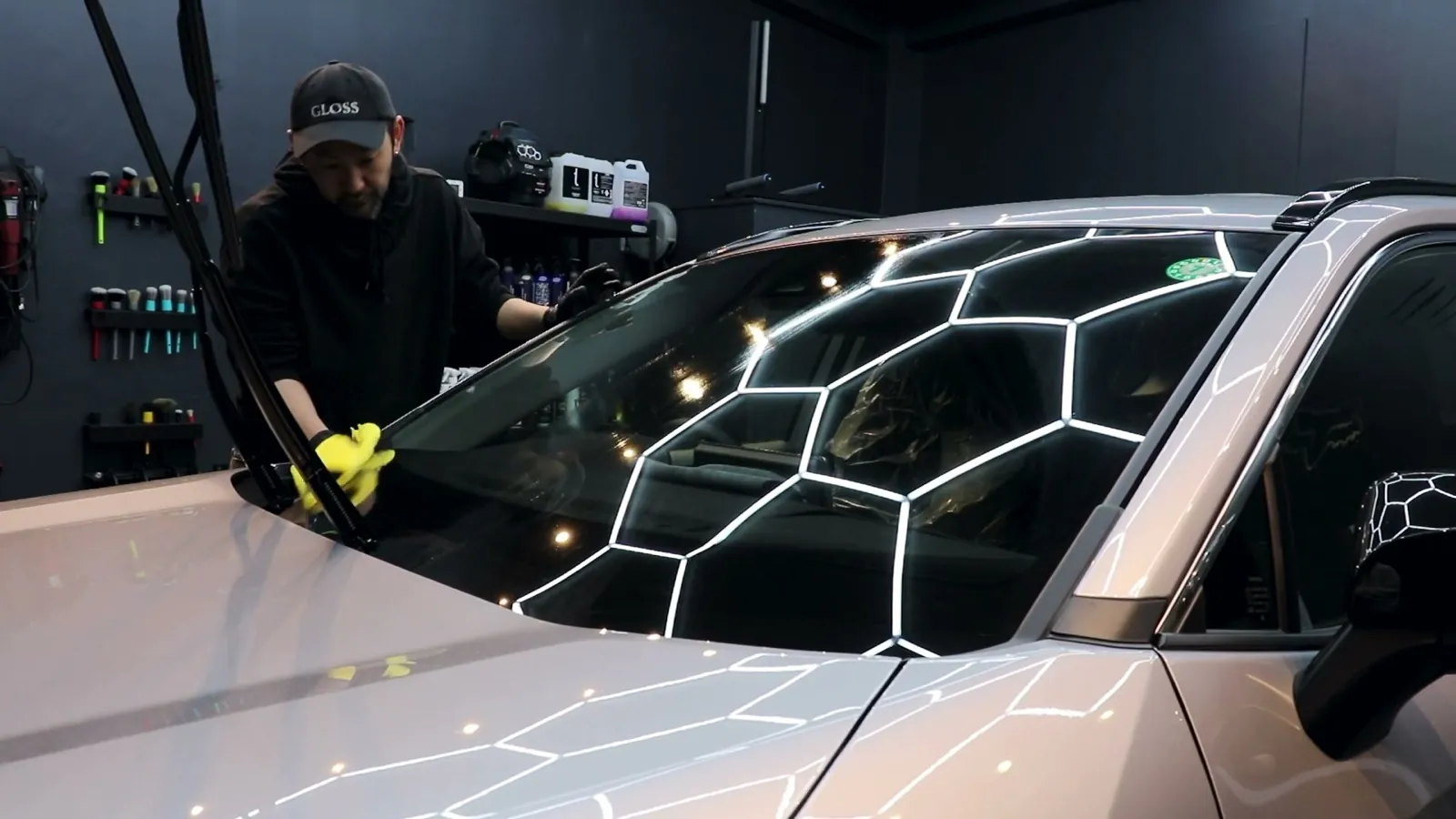
- Top photo: A detailer wiping down the windshield of a silver RAV4 with a microfiber towel, from GLOSS AutoDetail's video.
- How well each option works: Consumer Reports' glass cleaner test as reported by 6abc and WAFB, the Shop TODAY glass cleaner test (February 25, 2026), Wilson Auto Detailing, TrisFix's vinegar side-by-side, Out of Spec Detailing's water spot test, The Drive and recommendations from nine groups of users, including detailing forums, chemical sensitivity groups and budget car owners.
- Why glass hazes and how to clean it: the 1972 Chevrolet service bulletin, SlashGear, The Rag Company, Chemical Guys, Autofiber, Bob Vila and America's Test Kitchen. Vinegar recipe and the castile soap warning from Lisa Bronner.
- Ingredients and safety: ECOS, Branch Basics Streak-Free instructions, Windex Original at Target, Sprayway at Stop & Shop, the Stoner Invisible Glass safety data sheet, Attitude, Better Life, Mamavation (March 1, 2022) and the aspergillosis charity's guide.
- Certifications: EPA's Safer Choice label page, the 2024 Safer Choice standard, EPA's fragrance-free criteria and Cleanfax.
- Tint and washer fluid: XPEL product care, Stoner's tint guide, the Prestone De-Icer safety data sheet (2019), EU Regulation 2018/589, the UMass and TURI methanol study (2017) and a permies.com thread.
- Toyota owner's manual: 2023 to 2025 RAV4 Hybrid (OM0R102U), pp.177, 253 to 255, 385, 386, 388, 389, 397 and 406. Cost per car is my own estimate from the prices shown, assuming about 1 fl oz per full car.
RAV Buddy is an independent fan site. We're not affiliated with or endorsed by Toyota. RAV4 is a trademark of Toyota Motor Corporation.